So you’ve got your shiny new SANWEI BravoBee Carbon paddle. You’ve cleared the dining table, recruited a willing opponent, and you’re ready to play. You hit a few shots back and forth. It’s fun! You’re feeling good.
Then your friend, who’s played a bit more than you, does something with the ball that makes it die on the other side of the table. You stare in confusion. “Nice dink!” they say.
Dink? You thought dinking was something you did in pickleball. Or maybe it’s a basketball term? You smile and nod, but inside you’re thinking: What on earth are they talking about?
Welcome to the world of ping pong lingo—where everyday words have totally different meanings and sounding like you know what you’re doing is half the battle.
Don’t worry. I’ve been there. When I first started playing, I nodded along to terms like “loop” and “push” while having absolutely no idea what they meant. But once you learn the language, the game opens up in a whole new way.
Let’s fix that. Here’s your beginner’s guide to ping pong lingo, so you can talk the talk—and eventually walk the walk.
Part 1: The Basic Shots – What You’ll Actually Use
Let’s start with the shots you’ll encounter most often. These are the building blocks of every rally.
The Dink
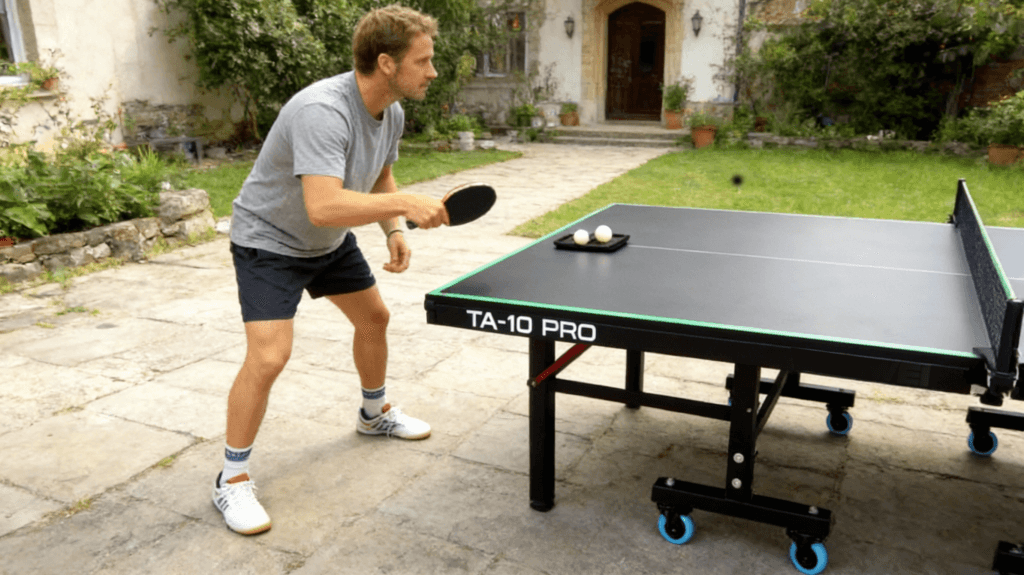
Let’s tackle the one that confused me most. A dink is a soft, controlled shot that just barely clears the net and lands short on the opponent’s side. It’s not about power—it’s about placement and touch.
Think of it as the ping pong equivalent of a gentle tap. You’re not trying to win the point outright; you’re trying to force your opponent into a weak return or set up your next shot. Dinks are especially common in doubles play and when you’re trying to break someone’s rhythm.
How it feels: Soft, controlled, almost delicate. You’re barely swinging—just guiding the ball over.
The Drive
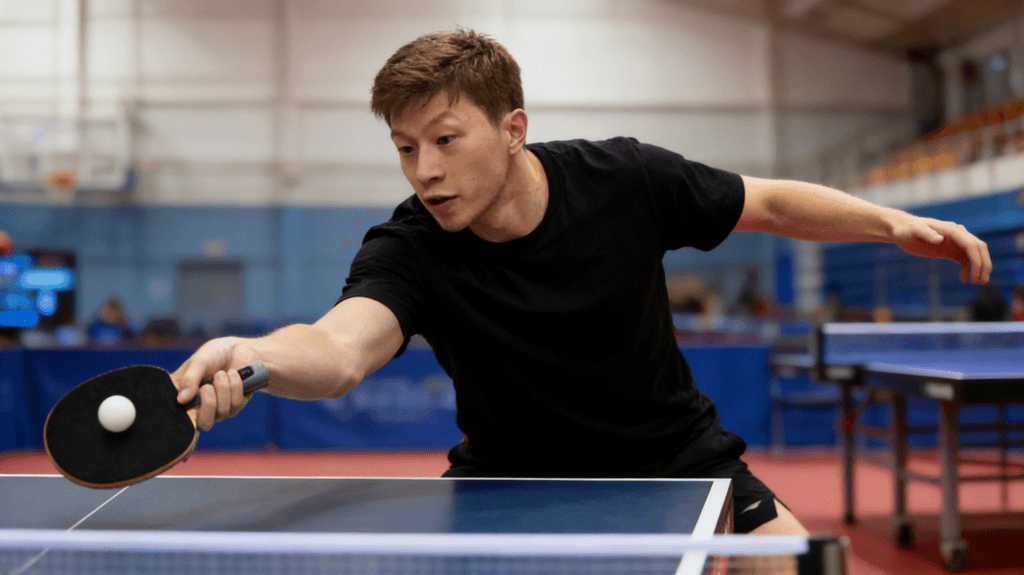
The drive is your bread-and-butter shot. It’s a flat, aggressive hit with minimal spin, aimed at winning the point through speed and placement. When you see players blasting the ball past each other, that’s a drive.
Drives are all about timing and precision. You hit the ball at the peak of its bounce, meeting it squarely with your paddle. No fancy brushing—just clean contact.
How it feels: Solid, satisfying, powerful. The ball jumps off your paddle with purpose.
The Loop
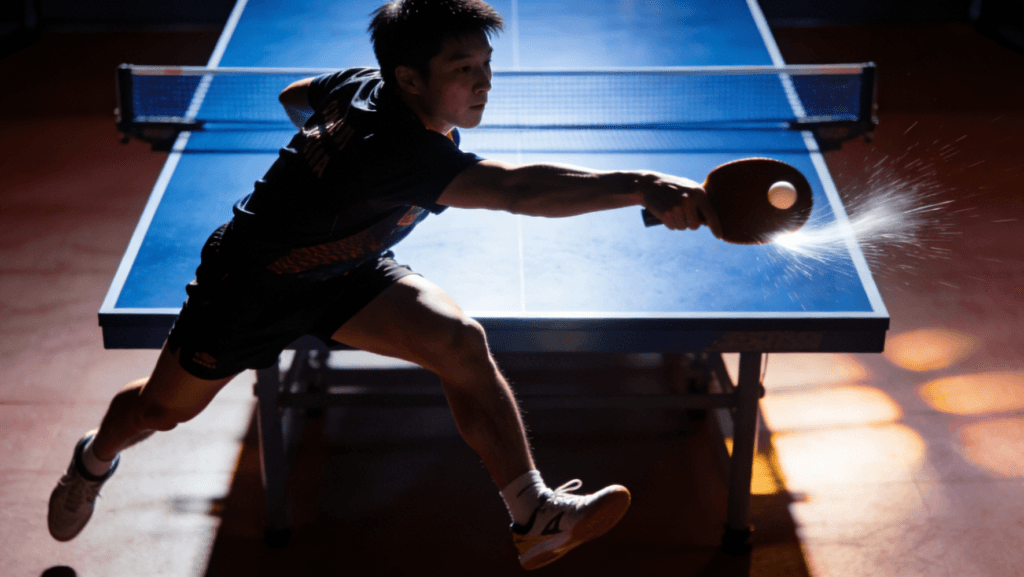
The loop is where things get fancy. It’s a heavy topspin shot that arcs over the net and dips down sharply, jumping forward when it bounces. Loops are the primary attacking shot for modern players.
To execute a loop, you brush the top of the ball with a fast, upward swing. The friction between your rubber and the ball generates heavy topspin, which makes the ball dip and kick.
How it feels: The ball sinks into your sponge and launches with heavy rotation. It’s almost like you’re lifting the ball over the net, not just hitting it.
The Push
The push is a defensive shot with backspin. You “push” the ball back over the net, usually against an opponent’s push or a weak serve. It’s safe, controlled, and designed to keep the rally alive while you wait for an attack opportunity.
Pushes are great for resetting the point and forcing your opponent to generate their own pace.
How it feels: A gentle slicing motion, brushing under the ball to create backspin. The ball travels slowly and stays low.
The Smash
The smash is exactly what it sounds like: an overhead, high-speed kill shot. When your opponent pops the ball up high, you smash it down with as much power as you can muster. It’s the exclamation point of ping pong.
Warning: smashes look cool, but they’re also easy to miss. Timing is everything.
How it feels: Pure power. You’re putting everything into the shot, and the result is (hopefully) an unreturnable ball.
Part 2: Spin Zone – The Magic Behind the Ball
Now let’s talk about what makes ping pong endlessly fascinating: spin. Once you understand spin, you’ll never watch the game the same way again.
Topspin
Topspin is when the ball rotates forward, away from you, in the direction it’s traveling. A ball with heavy topspin dips down faster than expected and jumps forward when it bounces.
Topspin is the foundation of modern attacking play. It lets you hit the ball harder while still keeping it on the table—the forward rotation pulls the ball down.
How to recognize it: The ball arcs down sharply and shoots forward off the bounce. Opponents often misjudge how fast it will come at them.
Backspin (Underspin)
Backspin (also called underspin) is the opposite—the ball rotates backward, against the direction of travel. A ball with backspin slows down when it bounces and stays low, sometimes even skidding or dying.
Backspin is your defensive weapon. It disrupts your opponent’s rhythm and forces them to lift the ball, setting up your next attack.
How to recognize it: The ball travels slower and seems to “stop” when it hits the table. It barely rises off the bounce.
Sidespin
Sidespin makes the ball curve sideways in the air. It’s most common on serves and tricky returns. A ball with sidespin will break left or right, making it hard to read and return cleanly.
Sidespin is the magician’s tool—it creates angles that shouldn’t be possible.
How to recognize it: The ball curves in the air, like a curveball in baseball. When it bounces, it may kick sideways.
Part 3: Scoring Lingo – Sound Like a Pro
You’ve got the shots and the spin. Now let’s make sure you understand what’s happening when the score is announced.
Deuce
Deuce is when the score reaches 10-10. At this point, you need to win by two clear points. The game continues until someone achieves that two-point margin—12-10, 13-11, 14-12, and so on.
Deuce is where matches get really exciting. Every point is critical, and the pressure builds with each rally.
Let
A let is a point that doesn’t count and is replayed. The most common let is when a serve touches the net but still lands in the correct service box. The point is replayed with no penalty.
Lets also occur if there’s a distraction or interruption during play. Basically, something happened that wasn’t fair, so we do it over.
Advantage
In deuce, when one player wins a point, they have advantage. The score might be announced as “advantage serve” or “advantage receive” to indicate who’s ahead. If the player with advantage wins the next point, they win the game. If they lose it, we’re back to deuce.
Love
Yes, ping pong uses tennis scoring terminology. Love means zero. So if the score is 3-0, you’d say “three-love.”
How the BravoBee Carbon Helps You Learn These
Learning the terms is one thing. Actually feeling the difference between a drive and a loop, or recognizing backspin when you see it—that takes practice. And the right equipment makes all the difference.
The SANWEI BravoBee Carbon is designed to give you the feedback you need to learn faster.
Fantastic Feedback Thanks to Vibration Slots
The BravoBee features three impact reduction slots on each side of the handle. These slots aren’t just for comfort—they actually help you learn. By dampening harsh vibrations while preserving clear tactile feedback, they let you feel exactly where on the paddle you made contact and what kind of shot you just executed.
Hit a clean drive? You’ll feel the satisfying solid contact. Brush a perfect topspin loop? The ball’s grip and release will communicate through your hand. This feedback loop accelerates your learning because your body understands what worked and what didn’t.
Control 100 Means More Practice, Less Frustration
With a control rating of 100, the BravoBee is incredibly forgiving. You’ll have longer rallies, which means more repetitions and more opportunities to practice different shots. The more you play, the more intuitive the terms become.
Spin 95 Lets You Experiment
The BravoBee’s 95 spin rating and high-elasticity, big hole sponge mean you can actually generate spin as you learn. You’ll feel the difference between brushing the ball for topspin and slicing under it for backspin. That tactile feedback is invaluable for understanding what the terms actually mean in practice.
Now You Can Talk the Talk and Walk the Walk
Learning ping pong lingo is like learning any new language—it feels awkward at first, but soon it becomes second nature. The next time your friend says “nice dink,” you’ll know exactly what they mean. Better yet, you’ll be able to respond with your own “thanks, that loop of yours was tough to handle!”
But remember: knowing the words is just the beginning. The real magic happens when you step up to the table and actually experience these shots for yourself. That’s where the SANWEI BravoBee Carbon comes in—it’s the perfect companion for your journey from confused beginner to confident player.
👉 Get your BravoBee Carbon here and start practicing your dinks, drives, and everything in between. Your vocabulary—and your game—will thank you.
What ping pong term confused you most when you started? Drop it in the comments—I’d love to share what it means!
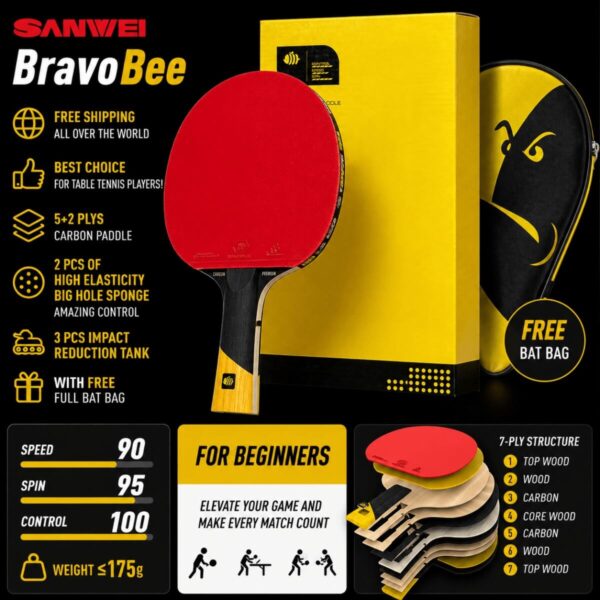
BravoBee Carbon Ping Pong Paddles
- Free Shipping All Over The World
- Best choice for table tennis players!
- 5+2 plys carbon paddle
- 2 pcs of high elasticity big hole sponge, amazing control
- 3 pcs Impact reduction tank
- with FREE full bat bag