When I first started shopping for ping pong paddles, I had no idea there were different rubber hardness levels. I thought all rubbers felt the same. Then I tried a friend’s rock‑hard paddle and my hand ached after 10 minutes. Another friend’s mushy rubber felt like hitting with a sponge. That’s when I learned about ping pong rubber hardness – and how the soft vs hard sponge debate can make or break your game. For most amateurs, the winner is clear: soft rubber is your friend. It offers a beginner rubber feel that’s forgiving and spinny. The BravoBee rubber grip is on the softer side, providing excellent table tennis sponge comfort without feeling mushy. In this article, I’ll explain why soft rubber is ideal for learning, how it compares to hard rubber, and why the SANWEI BravoBee Carbon paddle gets the balance just right.
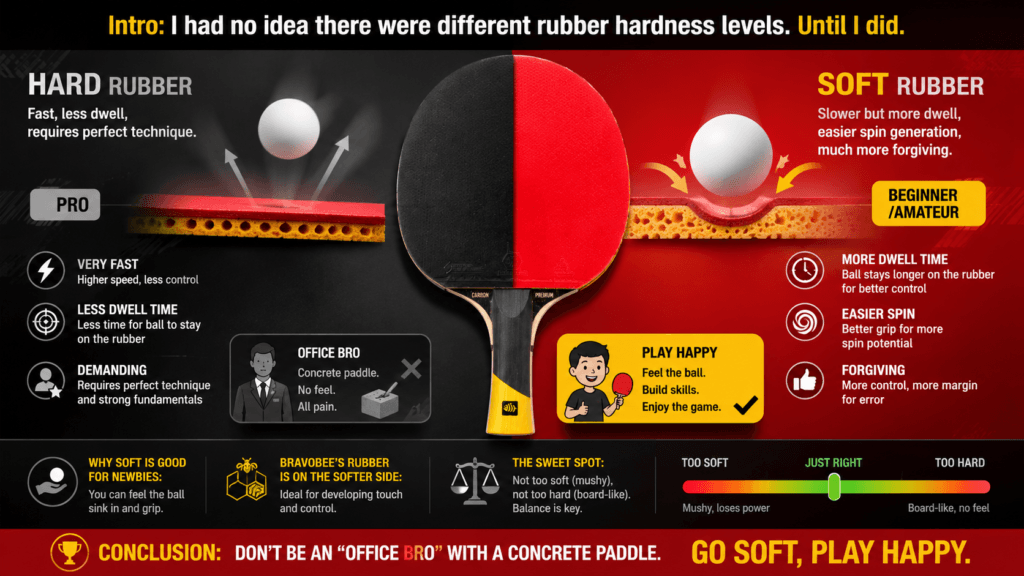
Hard Rubber: Fast, Less Dwell, Requires Perfect Technique
Hard rubbers (often called “hard sponges” or “tacky hard rubbers”) are designed for advanced and professional players. The sponge is dense and firm, and the rubber top sheet may be very tacky. When you hit the ball, there’s very little “dwell time” – the ball is on and off the paddle almost instantly. This produces:
- High speed: The ball launches quickly with less effort.
- Less spin on slow shots: To generate heavy spin, you need a very precise, fast brushing motion.
- Unforgiving feedback: Off‑center hits feel harsh and the ball often sprays wildly.
- Demanding technique: You need perfect timing and angle to control the ball.
For a beginner, a hard rubber is a recipe for frustration. You’ll miss a lot, your arm will get tired, and you’ll have no idea why. Many cheap paddles use hard, dead rubber that’s both hard and slick – the worst of both worlds. That’s why the soft vs hard sponge decision is so important: hard is not for newbies.
Soft Rubber: Slower but More Dwell, Easier Spin Generation, Much More Forgiving
Soft rubbers (often called “soft sponges” or “Euro/Japanese style”) are the opposite. The sponge is porous and elastic, allowing the ball to sink in for a split second. This “dwell time” is the secret to spin and control. Soft rubber offers:
- Excellent grip: The ball sinks in, so the rubber can grab it and impart heavy rotation even with a moderate brushing motion.
- Forgiveness: Off‑center hits still land on the table because the sponge absorbs some of the error.
- Comfortable feedback: The sponge dampens harsh vibrations, reducing shock to your arm.
- Slower speed (but still sufficient): The ball doesn’t rocket off, but you can generate plenty of pace with good technique.
For amateurs, soft rubber is a godsend. It gives you the beginner rubber feel that builds confidence. You’ll actually enjoy practicing because you’ll experience success. This is why so many entry‑level to intermediate paddles use softer sponges. The BravoBee rubber grip is a perfect example – it’s soft enough to be forgiving but lively enough to reward good strokes.
Why Soft Is Good for Newbies: You Can Feel the Ball Sink In and Grip
The most important benefit of soft rubber for new players is feedback. When you hit a ball with a soft sponge, you can feel it compress. That tactile sensation tells you if you made clean contact or if you brushed the ball. You learn what a good shot feels like. With hard rubber, the ball just bounces off – you have no idea what happened. Soft rubber also makes it much easier to generate spin. A gentle brushing motion with an open paddle face can produce a heavy backspin serve. This early success is addictive. You’ll want to keep practicing, and you’ll improve faster. The BravoBee’s 95 spin rating is directly enabled by its soft, high‑elasticity sponge. You don’t need pro‑level strength to make the ball curve.
I’ve watched beginners struggle with hard rubber for weeks, then switch to a soft paddle and suddenly start enjoying the game. Their faces light up when they land their first spinny serve. That’s the power of table tennis sponge comfort.
BravoBee’s Rubber Is on the Softer Side: Ideal for Developing Touch
The BravoBee Carbon features a high‑elasticity, big hole sponge that is definitely on the softer side of the spectrum. It’s not mushy – it has enough rebound to give you decent speed (rating 90). But it’s soft enough to allow the ball to sink in, providing excellent dwell time. This makes the BravoBee an ideal paddle for developing players. You’ll learn to feel the ball, generate spin, and control your placement. The BravoBee rubber grip is also slightly tacky (not too sticky, not too slick), which adds to the soft, grippy feel. Many players who upgrade from cheap hard‑rubber paddles to the BravoBee are shocked at how much easier the game becomes. They finally understand what “touch” means.
I can personally attest: after using a hard rubber paddle for years, switching to the BravoBee was like taking a weighted vest off. My forearm stopped aching, and my spin improved overnight. The softness allowed me to brush the ball without muscling it.
The Sweet Spot: Not Too Soft (Mushy), Not Too Hard (Board‑Like)
Of course, there’s such a thing as too soft. A very soft, low‑density sponge can feel “mushy” – the ball sinks in and doesn’t come out with enough pace. This can make your shots feel sluggish. On the other end, a very hard sponge feels like a board, with no dwell time. The ideal for amateurs is a medium‑soft sponge – soft enough to grip, but firm enough to have some pop. The BravoBee’s 2.00mm high‑elasticity big hole sponge hits that sweet spot. It’s softer than a typical hard Chinese rubber (like DHS Hurricane 3) but not as mushy as some very soft beginner rubbers. This balance is why the BravoBee works for both beginners learning spin and intermediates wanting more control.
If you’re unsure what hardness you prefer, start with medium‑soft. You can always experiment later. The BravoBee is a safe, high‑quality choice that won’t lead you astray.
How to Test Rubber Hardness for Yourself
If you have access to a few paddles, try this simple test: press your thumb into the rubber. Does it depress easily and spring back slowly? That’s soft. Does it feel like pressing on a hard rubber eraser? That’s hard. Next, bounce a ball on the paddle from a few inches high. A soft sponge will make a dull “thud” and the ball won’t bounce very high. A hard sponge will make a sharper sound and the ball will bounce higher. Both have their uses, but for a learning player, the soft feel is usually more comfortable. The BravoBee sits in the middle – not too dead, not too lively – offering excellent table tennis sponge comfort.
You can also check the sponge thickness. Thicker sponges (2.1mm+) tend to feel softer because there’s more material to compress. The BravoBee’s 2.00mm is the standard for amateurs – not too thick, not too thin.
Common Myths About Soft Rubber
Some players believe that soft rubber is “slow” and “only for beginners.” That’s not true. Many advanced players use soft rubbers for their spin and control, especially in the modern looping game. The speed of the paddle comes from the blade and sponge combination, not just hardness. The BravoBee’s 5 wood + 2 carbon blade adds plenty of pop to complement the soft sponge. So don’t think soft rubber means you’ll hit slow. It just means you’ll have more time to feel the ball – which is a good thing.
Another myth: soft rubber wears out faster. While it’s true that very soft sponges can break down quicker, the BravoBee’s high‑elasticity sponge is designed for durability. With proper care (clean with water, store in the bag), it will last a long time.
Conclusion: Don’t Be an ‘Office Bro’ with a Concrete Paddle. Go Soft, Play Happy.
Rubber hardness is a critical factor in how your paddle feels and performs. For amateurs, ping pong rubber hardness should lean toward the soft side. The soft vs hard sponge debate is easily settled: soft gives you dwell time, spin, and forgiveness. It provides the beginner rubber feel that builds confidence. The BravoBee rubber grip is a perfect example of medium‑soft done right. It offers excellent table tennis sponge comfort without being mushy. So next time you see an “office bro” with a rock‑hard concrete paddle, smile politely. Then pick up your BravoBee and enjoy the game. Soft is your friend. Go soft, play happy.
👉 Get your BravoBee Carbon here and experience the soft, spinny difference.
What rubber hardness do you prefer? Share your experience in the comments – I’d love to hear what works for you!
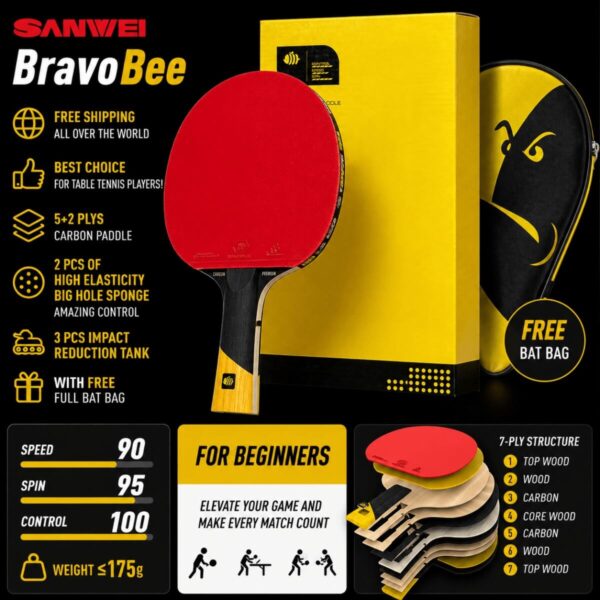
BravoBee Carbon Ping Pong Paddles
- Free Shipping All Over The World
- Best choice for table tennis players!
- 5+2 plys carbon paddle
- 2 pcs of high elasticity big hole sponge, amazing control
- 3 pcs Impact reduction tank
- with FREE full bat bag