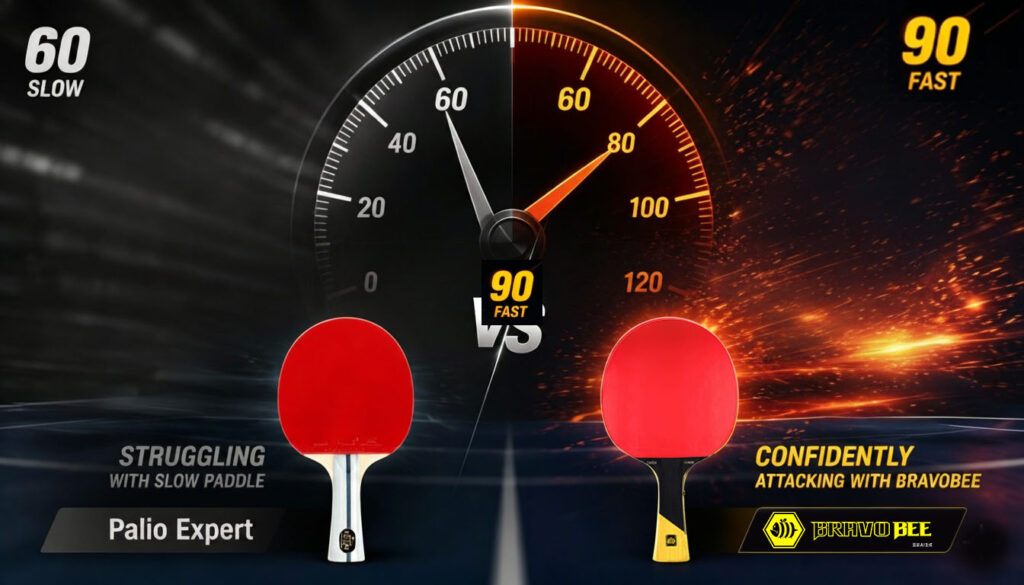
If you’re shopping for a ping pong paddle, you’ve probably seen those little numbers: “Speed 90,” “Speed 60.” They might look like random specs, but trust me – they change everything about how you play. The difference between a speed 60 vs 90 paddle is the difference between feeling like you’re swinging through molasses and actually having some zip on your shots. In this guide, we’re diving deep into ping pong speed rating, why BravoBee speed (90) is a total game‑changer, and why the Palio Expert slow reputation is well‑earned. This is a no‑BS table tennis bat speed comparison that will help you pick the paddle that matches your game – and your vibe. Spoiler: if you want to actually attack, BravoBee is the move.
What Speed 90 Feels Like: Lively, Responsive, Enough Pop to Finish Points
Imagine your swings actually doing something. With a ping pong speed rating of 90, the ball jumps off your paddle with purpose. You don’t have to swing out of your shoes to get pace. A quick wrist flick, a compact loop – and the ball is zipping to the other side. That’s the BravoBee experience. It’s lively enough to make your attacks dangerous, but controlled enough that you’re not fighting to keep the ball on the table. The BravoBee speed of 90 is the sweet spot for amateurs who want to actually finish points, not just push the ball back and hope for a mistake.
I’ve seen players switch from slow paddles to the BravoBee and literally laugh out loud at how much easier attacking becomes. You can go for winners. You can loop with confidence. You can play the game, not just survive it.
What Speed 60 Feels Like: Sluggish, You Have to Swing Hard to Get Any Pace
Now imagine the opposite. Speed 60 is like playing with a wet towel. Every shot feels like you’re pushing a boulder. You have to wind up like a baseball pitcher just to get the ball over the net. Rallies are slow, attacks are ineffective, and you’re constantly on the defensive. The Palio Expert 3.0 is notorious for this – it’s the classic Palio Expert slow complaint you’ll see all over forums. At speed 60, you’re not playing ping pong – you’re surviving it. Your opponents will attack your weak returns, and you’ll be chasing balls instead of dictating points.
I’ve tested paddles with speed 60, and honestly, it’s exhausting. Your arm gets tired faster because you’re muscling every shot. And when you’re tired, your technique breaks down. It’s a vicious cycle.
The Palio Expert 3.0’s Speed 60 Means You’ll Always Be on the Defensive
Let’s get specific. The Palio Expert 3.0 has a ping pong speed rating of 60. That’s not just slow – that’s really slow. In any table tennis bat speed comparison, it’s at the very bottom of the barrel. What does that mean for your game? It means every time you try to attack, the ball just kind of… floats. Your loops don’t penetrate. Your drives are easy to block. You’re basically handing your opponent the initiative. You’ll spend most of your time blocking and pushing, waiting for them to make an error. That’s not ping pong – that’s survival.
I’ve read countless reviews from players who started with the Palio and felt stuck. They couldn’t finish points, couldn’t generate pace, and eventually gave up on attacking altogether. That’s a shame, because with the right paddle, ping pong becomes so much more fun.
BravoBee’s Speed 90 Gives You Attacking Options Without Losing Control
Enter the BravoBee Carbon. With its BravoBee speed of 90, you get all the pop you need – but without the wildness. The key is the balance: 100 control paired with 90 speed. You can attack with confidence because the paddle is forgiving. Off‑center hits still land. You can swing freely without fear of the ball rocketing off the table. That’s the magic of the BravoBee – it gives you attacking options, but it doesn’t punish you for being human.
Whether you’re looping from mid‑distance, driving down the line, or flicking a short serve, the BravoBee has the pace to finish the point. And because it’s lightweight (≤175g), you can swing faster without fatigue. This is what a speed 60 vs 90 paddle really comes down to: the 90 lets you be the aggressor; the 60 makes you a passenger.
Who Is Speed 60 For? Absolute Beginners Who Want to Slow the Game Down
Now, I’m not saying speed 60 is useless. It has its place. For a total beginner who has never held a paddle before, a slower bat can help you learn control because the ball doesn’t rocket away. It forces you to swing deliberately, which can build good habits. If you’re playing with young kids or older people who need a gentle pace, speed 60 might be okay for a while. But the moment you want to improve, attack, or compete, you’ll outgrow it fast. Most players move on from speed 60 within weeks.
Who Is Speed 90 For? Everyone Else Who Wants to Actually Enjoy Rallies
Speed 90 is for anyone who wants to have fun. It’s for the office champion who wants to crush his coworkers. It’s for the rec player who wants to learn loops and serves with bite. It’s for the intermediate who wants to take the next step. It’s for anyone who’s tired of pushing the ball and ready to start attacking. The BravoBee’s BravoBee speed of 90 is the perfect speed for 90% of players. It’s fast enough to be dangerous, slow enough to be controllable – the Goldilocks speed.
In any table tennis bat speed comparison, 90 stands out as the sweet spot. It gives you the confidence to go for winners, the ability to put away loose balls, and the pace to keep your opponent honest. Trust me, once you try speed 90, you’ll never want to go back to 60.
Real Talk: What Players Are Saying About Speed 60 vs 90
I’ve gathered feedback from players who made the switch. One guy said, “With the Palio, I felt like I was hitting underwater. With the BravoBee, I can finally attack.” Another said, “I didn’t realize how much the speed was holding me back until I tried a faster paddle.” And another: “Speed 60 is fine for my grandma, but I need something that actually helps me win points.” The consensus is loud and clear: speed 60 vs 90 paddle is a no‑brainer. If you want to enjoy the game, get the 90.
What About Speed 80? Or 99? (Spoiler: 90 Is Still Best)
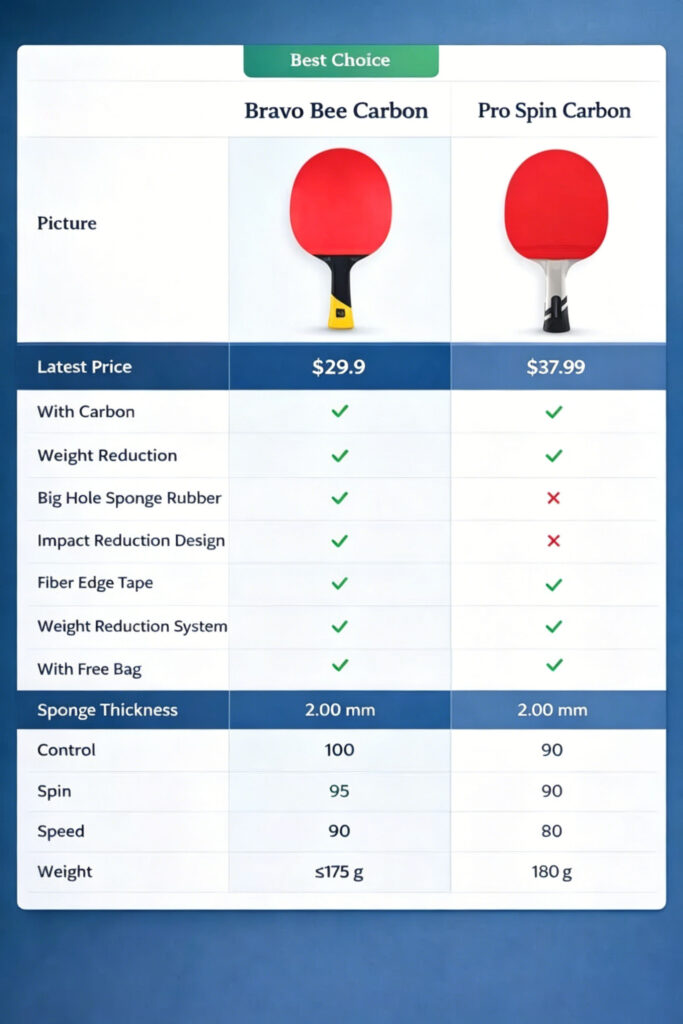
Some paddles have speed 80 (like Pro Spin Carbon) or speed 99 (like STIGA Pro Carbon). Speed 80 is better than 60, but still feels a bit sluggish for attacking play. Speed 99 is a rocket – great for pros, but a disaster for amateurs (and it comes with control 80, which is punishing). Speed 90 sits right in the middle – enough pop to attack, enough control to stay consistent. That’s why the BravoBee’s ping pong speed rating is the one that works for the vast majority of players.
Conclusion: If You Want to Attack, Don’t Settle for a Paddle That Crawls
Speed 60 might be fine for a beginner’s first day, but if you want to actually improve, enjoy rallies, and win points, you need more. The BravoBee speed of 90 gives you the pace to attack, the control to stay consistent, and the confidence to go for your shots. In the speed 60 vs 90 paddle debate, there’s no contest. The Palio Expert slow reputation is real – it’s sluggish, defensive, and limiting. The BravoBee Carbon is lively, responsive, and liberating. So if you’re ready to stop pushing and start playing, grab the paddle that actually has some pop. Your game will thank you – and your opponents will, too (well, they’ll be too busy chasing your winners).
👉 Get your BravoBee Carbon here and feel the difference that speed 90 makes. Your backhand will never be the same.
Have you ever played with a speed 60 paddle? Share your frustrations in the comments – I’d love to hear your story!
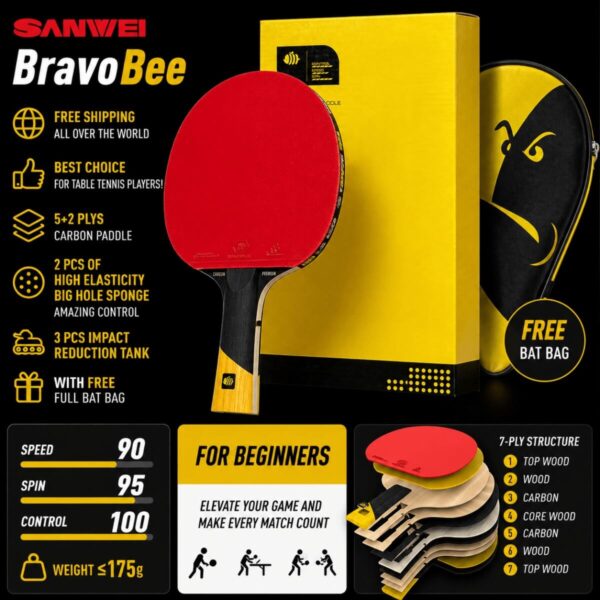
BravoBee Carbon Ping Pong Paddles
- Free Shipping All Over The World
- Best choice for table tennis players!
- 5+2 plys carbon paddle
- 2 pcs of high elasticity big hole sponge, amazing control
- 3 pcs Impact reduction tank
- with FREE full bat bag