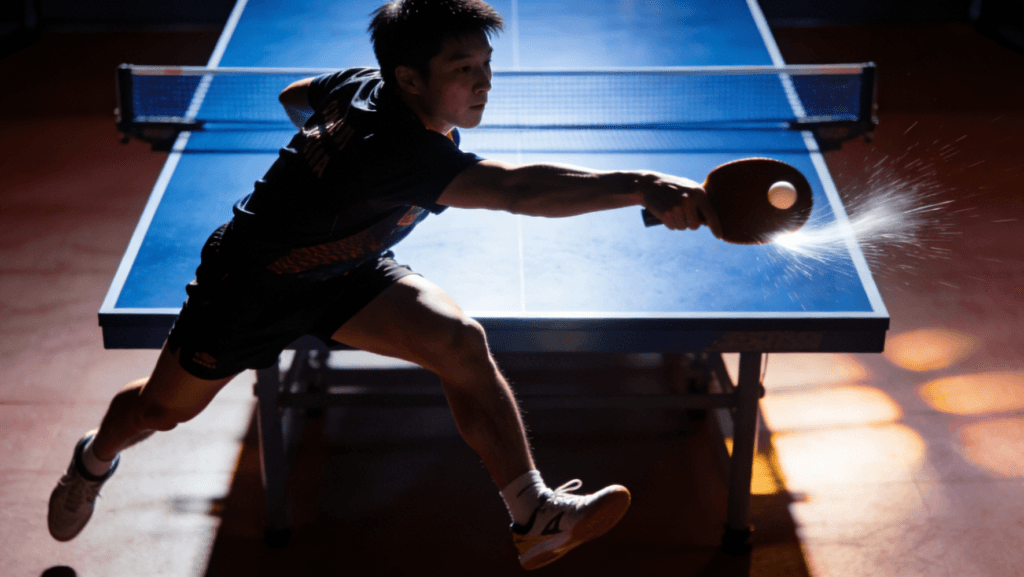
Have you ever wondered how ping pong paddles became the high‑tech tools they are today? The history of ping pong paddles is a fascinating journey from simple wooden boards to sophisticated carbon‑fiber blades. This paddle evolution story spans over a century, with each era bringing new materials and techniques that changed how the game is played. From sandpaper surfaces to the introduction of sponge, and finally to the carbon fiber history that gave us modern blades, the transformation is remarkable. Today, we’re living in the golden age of table tennis history, where advanced designs like the BravoBee Carbon represent the peak of BravoBee modern tech. In this article, we’ll trace the evolution of the paddle and show you where the BravoBee fits into this timeline.
The Early Days: Sandpaper and Wood (1890s‑1920s)
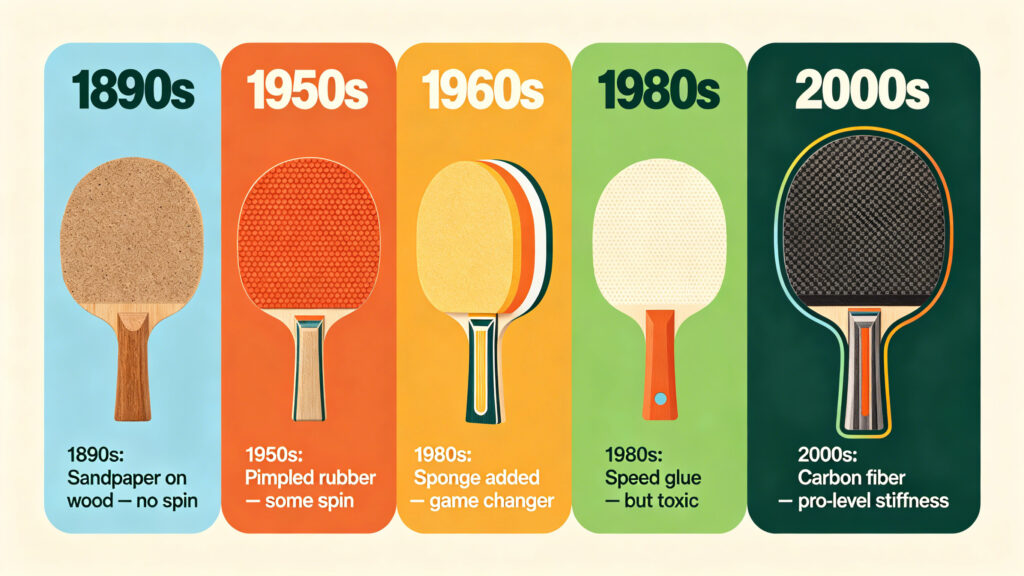
The first ping pong paddles were nothing more than wooden boards with sandpaper glued to the striking surface. The sandpaper provided a bit of friction, but spin was almost impossible. Players relied on placement and speed, not rotation. These early paddles were heavy, crude, and prone to warping. Yet, they were the starting point of the paddle evolution that would eventually lead to modern carbon blades. The game itself was called “gossima” or “whiff‑whaff” before the name ping pong stuck.
During this era, the lack of spin meant that rallies were short and tactics were simple. The history of ping pong paddles began with these rudimentary tools, but innovation was just around the corner.
The Pimpled Rubber Revolution (1930s‑1950s)
In the 1930s, players discovered that adding a sheet of pimpled rubber (with the pips facing outward) to the paddle dramatically increased control and allowed for basic spin. The rubber gripped the ball better than sandpaper. By the 1950s, pimpled rubber became standard. However, the sponge layer was still missing. Paddles were essentially wood with a thin rubber sheet. Spin was limited, but the game became more strategic.
This period also saw the rise of defensive styles. Players could “chop” the ball with backspin, making it difficult for opponents to attack. The table tennis history of this era is marked by long rallies and tactical battles.
The Sponge Addition – A Game Changer (1960s)
The single biggest leap in paddle evolution came in the 1950s and 1960s when manufacturers began adding a layer of sponge between the wood and the rubber. The sponge compressed on impact, increasing dwell time and allowing for massive spin and speed. Suddenly, players could loop, drive, and serve with heavy rotation. The sport became faster and more dynamic.
However, early sponges were inconsistent. Some players even used “speed glue” – a toxic adhesive that softened the sponge for extra pop. This led to a decades‑long arms race in equipment technology. The history of ping pong paddles during this time is also the history of regulation: the ITTF had to constantly update rules to keep the game fair.
The Carbon Fiber Revolution (2000s)
Carbon fiber had been used in aerospace and automotive industries for years, but it wasn’t until the 2000s that table tennis manufacturers began incorporating carbon layers into blades. The carbon fiber history in table tennis started with high‑end pro blades. Carbon added stiffness, which enlarged the sweet spot and gave players more power without extra effort. Pros loved the consistency.
But early carbon paddles were often too fast for amateurs. They had low control and punished mishits. The BravoBee modern tech approach changed that by balancing carbon with wood – offering the benefits of carbon without the drawbacks.
Today: The Hybrid Carbon/Wood Era – BravoBee’s Sweet Spot
Modern paddle design has settled on a hybrid approach. Pure wood blades offer great feel but lack power. Thick‑carbon pro blades are too unforgiving. The sweet spot is a 5 wood + 2 carbon construction, like the BravoBee Carbon. This gives you:
- 100 control rating: Forgiveness for off‑center hits.
- 95 spin rating: Grippy sponge for real rotation.
- 90 speed rating: Fast enough to finish points, but controllable.
- 2.00mm high‑elasticity big hole sponge: Ideal thickness for amateurs.
- Vibration reduction slots: Clear feedback without the sting.
- Lightweight (≤175g): Less fatigue, faster reactions.
This is the culmination of paddle evolution – a design that works for 90% of players. The BravoBee is affordable ($29.90), durable, and packed with features that would have seemed like science fiction to players a century ago.
What’s Next? Future Materials and Trends
The history of ping pong paddles is still being written. Future innovations might include:
- Bio‑based materials: Sustainable wood alternatives or eco‑friendly sponges.
- Smart paddles: Embedded sensors to track spin, speed, and contact point.
- Advanced carbon weaves: Even more precise tuning of stiffness and flex.
- Regulation changes: The ITTF may limit certain materials to keep the game skill‑based.
But for now, the BravoBee represents the perfect balance of modern technology and amateur‑friendly design. You don’t need to wait for the future – it’s already here.
Why the BravoBee Embodies Modern Paddle Tech
Let’s summarize how the BravoBee fits into this timeline:
- It uses carbon fiber history (5+2 layers) but tamed for amateurs.
- Its sponge (2.00mm big hole) is a direct descendant of the 1960s sponge revolution.
- Its FL handle with natural glue and vibration slots is the result of decades of ergonomic research.
- Its 100 control and 95 spin ratings show that modern tech can serve all players, not just pros.
When you hold a BravoBee, you’re holding the accumulated knowledge of over a hundred years of table tennis history. It’s not just a paddle – it’s a piece of living history.
Conclusion: You’re Living in the Golden Age of Paddles
From sandpaper to carbon, the paddle evolution has been driven by a desire for more spin, more speed, and more control. Today’s paddles are better than ever, and the BravoBee Carbon is a perfect example of how far the technology has come. It’s affordable, high‑performing, and designed for the modern amateur. So the next time you step up to the table, take a moment to appreciate the engineering in your hand. You’re not just playing a game – you’re enjoying the best history of ping pong paddles has to offer.
👉 Get your BravoBee here and own a piece of modern BravoBee modern tech. Your game – and your inner historian – will thank you.
What’s the oldest paddle you’ve ever used? Share your stories in the comments – I’d love to hear about vintage gear!
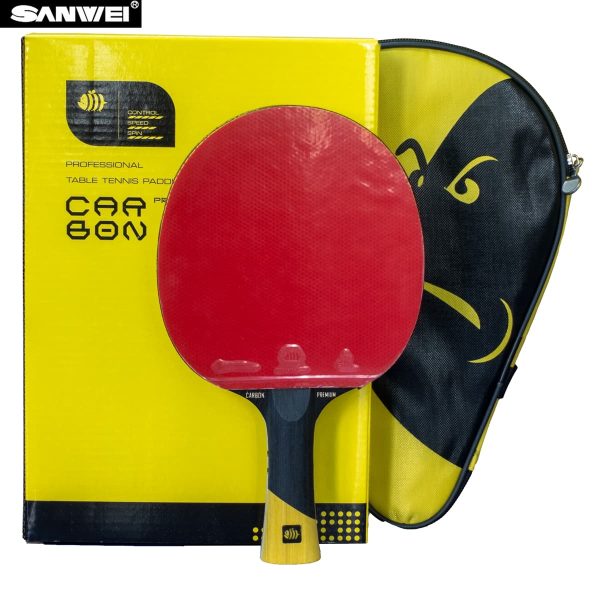
BravoBee Carbon Ping Pong Paddles
- Free Shipping All Over The World
- Best choice for table tennis players!
- 5+2 plys carbon paddle
- 2 pcs of high elasticity big hole sponge, amazing control
- 3 pcs Impact reduction tank
- with FREE full bat bag