You’ve got your SANWEI BravoBee Carbon paddle. You’ve been enjoying those satisfying rallies, the spin, the control. Now you’re looking at your kid and thinking: it’s time to pass on the love.
Ping pong is one of the best sports for children. It builds hand‑eye coordination, sharpens focus, teaches strategy, and—most importantly—it’s fun. But introducing a young child to the game requires patience, the right equipment, and a focus on play rather than perfection. With the lightweight BravoBee in hand, you’re already halfway there.
Here’s how to get your kids started, from first contact to first rally.
Why Ping Pong Is Great for Kids
Before we get into the how, let’s talk about the why. Ping pong isn’t just a game—it’s a developmental tool disguised as fun.
- Hand‑eye coordination: Tracking a small, fast ball and coordinating a swing builds neural pathways that benefit everything from handwriting to other sports.
- Focus and concentration: In a world of constant screen notifications, ping pong demands sustained attention. Kids learn to stay in the moment.
- Fine motor skills: The precise wrist and finger movements required develop dexterity.
- Strategy and problem‑solving: Even simple rallies involve decisions about placement and spin.
- Social connection: Ping pong is naturally interactive—a perfect way for kids to bond with friends and family.
And the best part? Kids don’t know they’re “learning.” They’re just playing.
Start Young: Age 5+ Can Start with Modified Games
Every child is different, but many kids can start engaging with ping pong around age 5. At this stage, forget the rules. Forget scoring. The goal is simple: make contact with the ball and have fun.
Younger children (5‑7) may not have the strength or coordination to handle a full table. That’s okay. Start with modified games that build basic skills without the pressure of a real rally.
Older children (8‑12) can start learning proper strokes, but still benefit from a patient, game‑based approach. The key is to keep the focus on play, not performance.
Use a Lightweight Paddle: BravoBee <175g Is Easy for Small Hands
One of the biggest barriers for kids is equipment. Adult paddles are often too heavy, too large, or too powerful for small hands. A heavy paddle will tire a child’s arm quickly, making the game frustrating instead of fun.
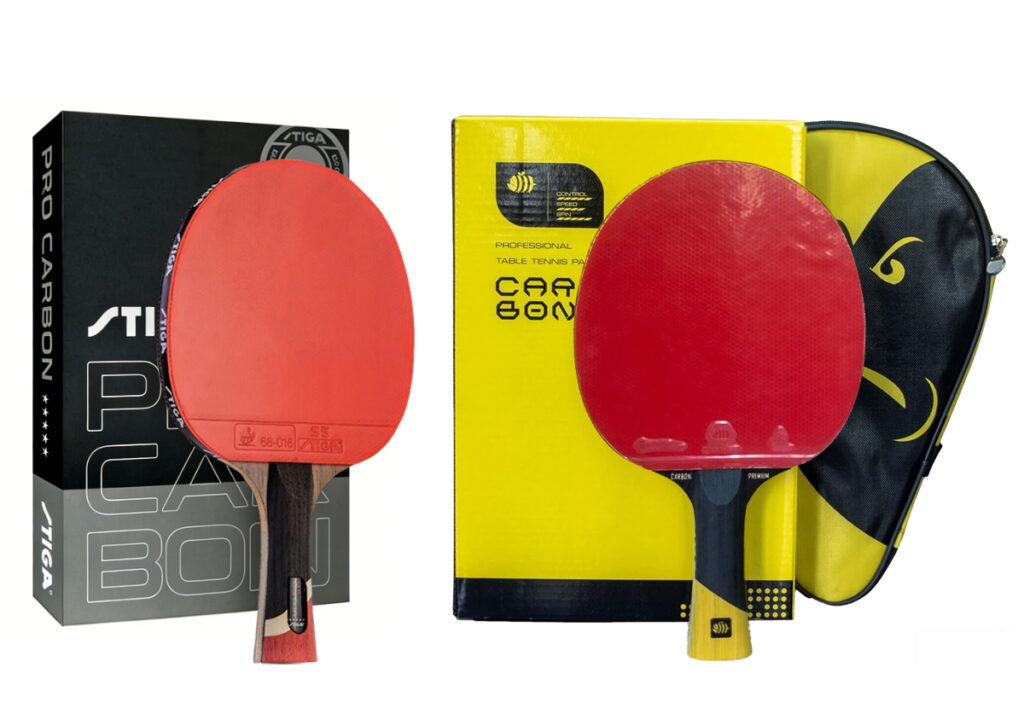
That’s where the BravoBee shines. At ≤175g, it’s light enough for young players to swing comfortably. The comfortable, FL‑shaped handle fits smaller hands better than many other paddles. And the 100 control rating means that even when their technique is rough, the ball will still go roughly where they want it.
You’re not giving your child a “kid’s paddle” that they’ll outgrow in a year. You’re giving them a real paddle that will grow with them, from those first clumsy swings to eventual spinny loops.
Focus on Fun: Just Making Contact Is a Win
When you’re teaching a child, your mindset matters. You’re not a coach—you’re a playmate. The first goal is not proper technique; it’s that spark of joy when the ball connects with the paddle.
Celebrate every contact. A high‑five after a hit that lands on the table? Absolutely. A silly dance when they accidentally return a serve? Even better. The more positive reinforcement you give, the more they’ll want to keep playing.
Keep sessions short—10 to 15 minutes is plenty for young children. Better to stop when they’re still having fun than to push until they’re tired and frustrated.
Games: ‘Keepy Uppy’ with Ball on Paddle
Before you even approach the table, try this simple game. It builds ball control and balance without the complexity of a rally.
How to play: Have your child balance a ping pong ball on the face of the BravoBee. Then see how many times they can bounce the ball upward without dropping it. Count together. Cheer when they beat their own record.
Why it works: This game develops the soft touch and stability needed for serves and pushes. It’s also a low‑pressure way to get comfortable with the feel of the paddle.
Progression: Once they’re confident, try bouncing the ball while walking slowly. Or have them bounce it to you and back—a cooperative “keep‑away” that introduces the idea of hitting to someone else.
Progress to the Table: Use Big, Slow Movements
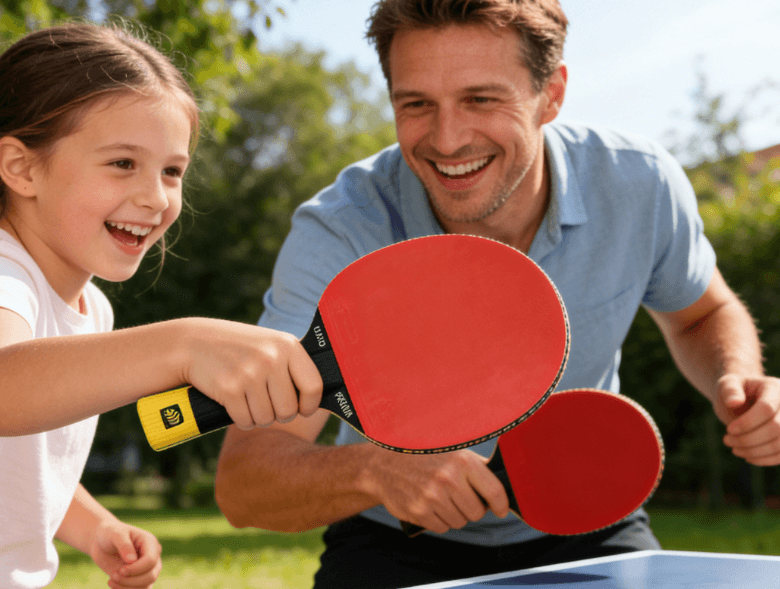
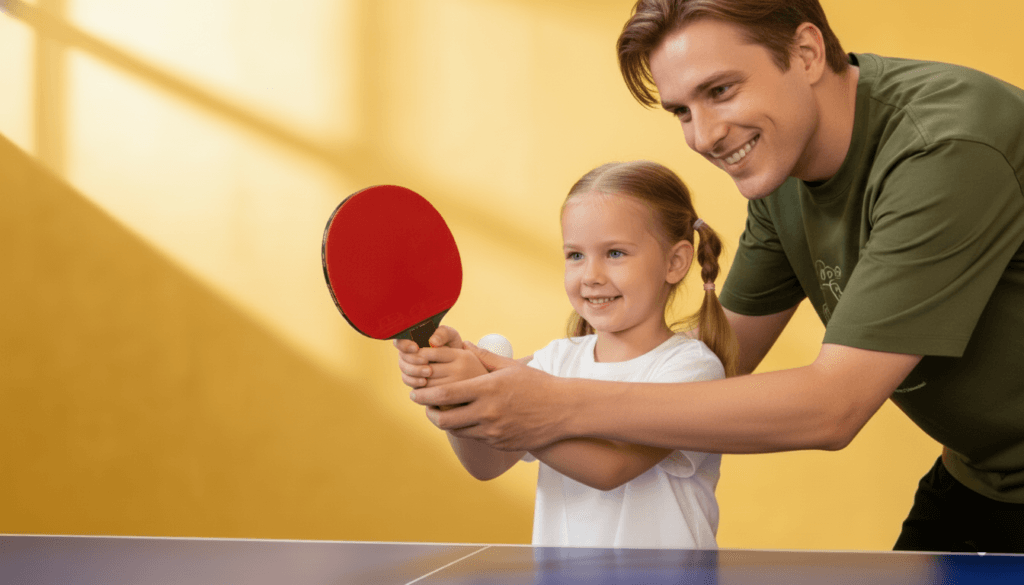
When they’re ready to try the real table, start with the basics. Place yourself on the same side of the table as your child. Gently toss the ball and guide their hand to make contact. This eliminates the challenge of getting the ball over the net and lets them focus purely on the swing.
Once they can make consistent contact, move to the other side of the table. Use big, slow feeds—think arcing, easy balls that give them time to react. Encourage them to use a full, relaxed swing, not a jab. The BravoBee’s 100 control rating will help keep those early shots on the table, reducing frustration.
For very young beginners, you can even lower the net or play with a smaller table. Some families use a conversion top on a coffee table to make the game more approachable.
Introduce Spin (When They’re Ready)
As your child’s consistency improves, you can start introducing basic spin. This is where the BravoBee’s 95 spin rating and high‑elasticity, big hole sponge become a teaching tool. Even with a slow, brushing motion, the ball will grip and behave in ways that feel like magic to a young player.
Start with simple backspin pushes. Show them how the ball stays low and dies. Let them try it. Then move to light topspin loops. The thrill of watching the ball dip and kick forward is often what turns casual interest into passion.
Make It a Family Ritual
The best way to keep kids engaged is to make ping pong a regular part of family life. A weekly “family tournament” with silly prizes. After‑school practice sessions where they get to be the teacher. A quick game before homework. When ping pong becomes a family tradition, it stops being “an activity” and starts being part of who you are together.
And because the BravoBee is durable (5 wood + 2 carbon layers, fiber edge tape) and comes with its own protective bag, you can leave it out and ready without worrying about damage. It’s always there, waiting for the next rally.
Celebrate Every Milestone
Finally, remember to celebrate. The first time they hit the ball over the net. The first time they return three shots in a row. The first time they win a point. These are huge achievements for a young player. Acknowledge them. Take a picture. Make a big deal.
When kids feel proud of their progress, they want to keep progressing. And before you know it, they’ll be the one teaching you a new trick.
The Family That Plays Together, Stays Together
Introducing your child to ping pong isn’t just about teaching a sport. It’s about creating shared experiences, building confidence, and spending quality time together. With the SANWEI BravoBee Carbon, you have the perfect tool for the journey: lightweight enough for small hands, forgiving enough for early swings, and capable enough to grow with them as they improve.
So grab your BravoBee, clear the table, and start playing. Those first wobbly hits might not look like much now, but they’re the beginning of a lifelong love for the game—and for each other.
👉 Get your BravoBee here and start making family memories today. Your kids will thank you later.
At what age did you introduce your child to ping pong? Share your tips and stories in the comments—I’d love to hear how you made it fun!
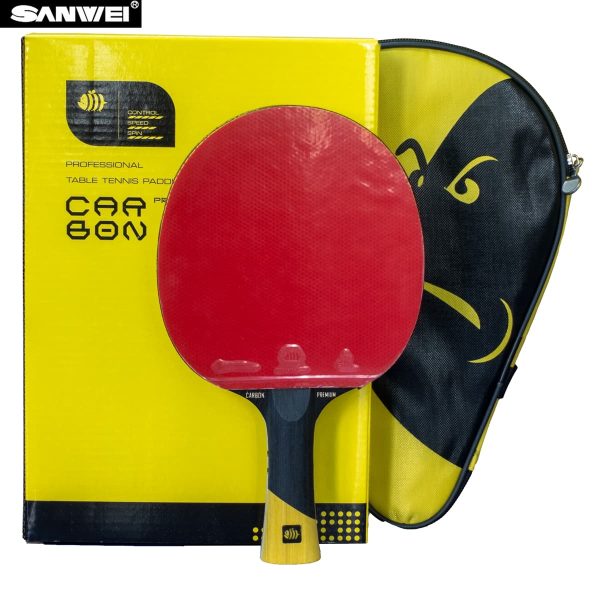
BravoBee Carbon Ping Pong Paddles
- Free Shipping All Over The World
- Best choice for table tennis players!
- 5+2 plys carbon paddle
- 2 pcs of high elasticity big hole sponge, amazing control
- 3 pcs Impact reduction tank
- with FREE full bat bag