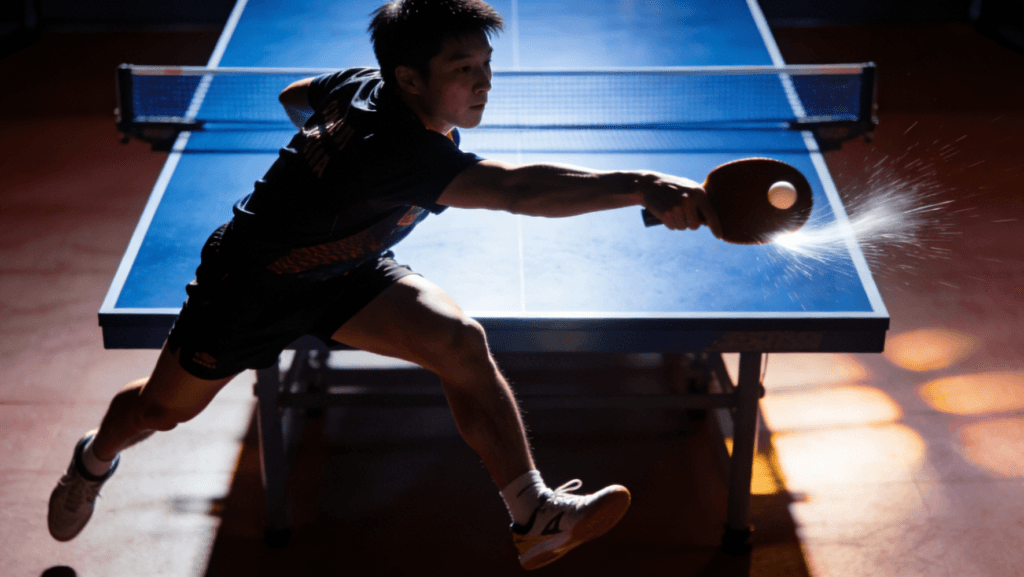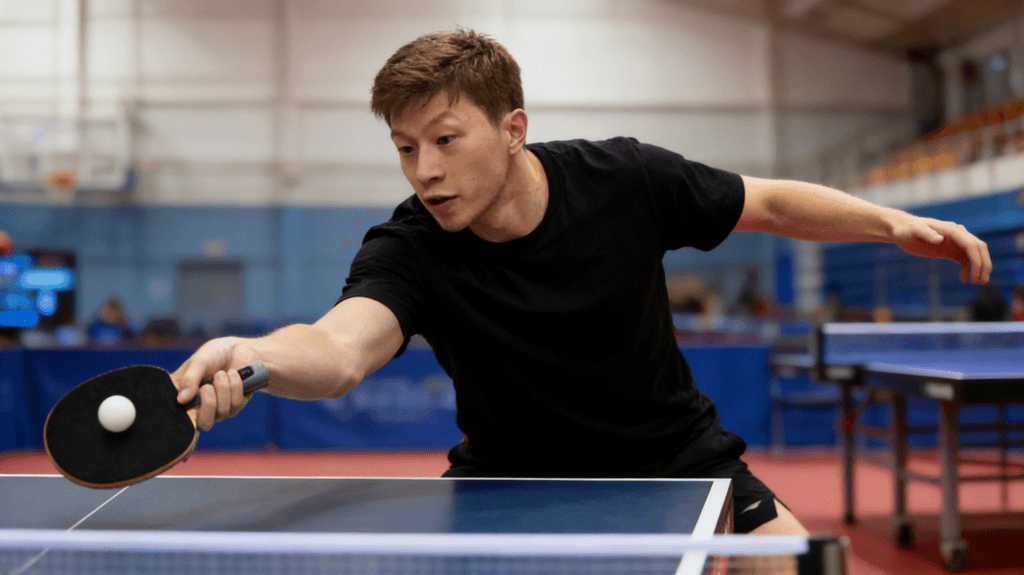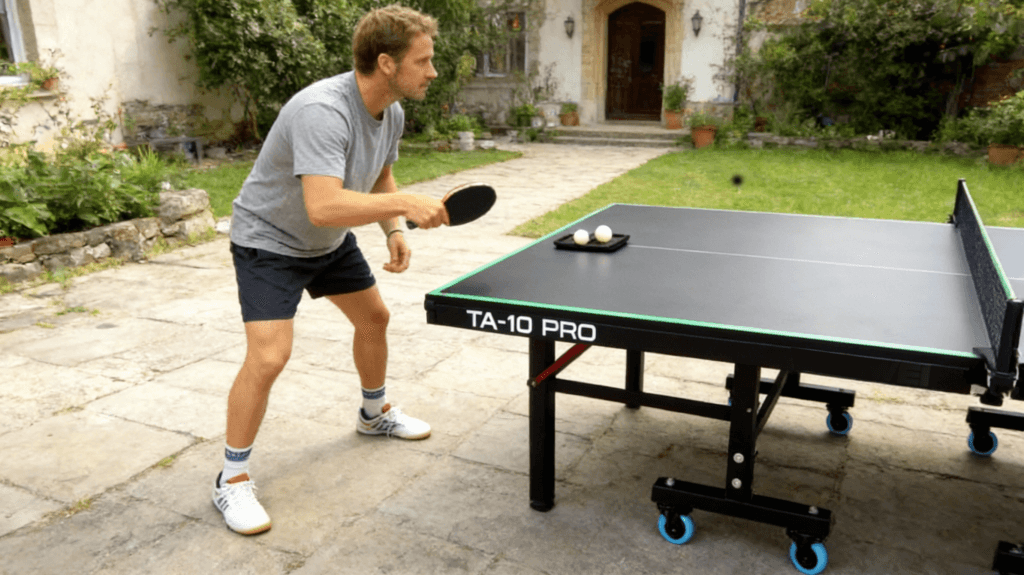

So you’ve been playing ping pong for a little while. You can hit the ball consistently. You can even sustain a decent rally with a friend. But something’s missing.
You watch other players—maybe at a club, maybe on YouTube—and the ball seems to obey them. It dips when they want it to dip. It curves around imaginary obstacles. It bounces weirdly, leaving opponents scrambling. It looks like magic.
Here’s the truth: it’s not magic. It’s spin. And once you understand the basics, you can start doing it too.
I remember exactly when I caught the spin bug. I was playing with my husband, and he hit this shot that just… died. The ball bounced twice before I could even react. “How did you DO that?” I demanded. He grinned and said, “Spin, babe. It’s all spin.”
That was my “aha!” moment. And now I’m here to help you have yours—with a little help from the SANWEI BravoBee Carbon paddle.
The Basics: Topspin and Backspin
Before we get into the how, let’s cover the what. There are several types of spin in table tennis, but as a beginner, you really only need to know two: topspin and backspin. Master these, and you’re 80% of the way there.
Topspin: The Dipper
Topspin is exactly what it sounds like: the ball spins forward, away from you, in the direction it’s traveling.
Imagine the ball rolling forward across a table—that’s topspin rotation. When a ball with topspin hits the opponent’s side, it jumps forward and downward, making it harder to return. It’s the go-to shot for aggressive players who want to keep the pressure on.
What it looks like: The ball travels in a slight arc, dipping down faster than a non-spin ball would. When it bounces, it shoots forward low and fast.
Why it’s useful: Topspin lets you hit the ball harder while still keeping it on the table. The forward rotation pulls the ball down, so you can swing with more power and confidence.
Backspin: The Stopper
Backspin (also called “underspin” or “slice”) is the opposite. The ball spins backward, against the direction of travel.
Think of the ball rolling backward toward you as it flies away from you—that’s backspin. When a backspin ball hits the table, it slows down and stays low. It can even “die” on the bounce, making it very difficult for opponents to attack.
What it looks like: The ball travels more slowly, with a flatter trajectory. When it bounces, it barely rises, sometimes even skidding backward slightly.
Why it’s useful: Backspin is your defensive weapon. It disrupts your opponent’s rhythm, forces them to lift the ball, and sets up your next attack.
The Secret Weapon: Your Rubber and Sponge
Here’s something that surprised me when I started learning spin: the paddle matters. A lot.
Spin isn’t just about technique. It’s about how the ball interacts with your rubber. And that’s where the SANWEI BravoBee Carbon‘s high-elasticity, big hole sponge comes into play.
Why Sponge Matters
Under the rubber surface of any ping pong paddle is a layer of sponge. That sponge compresses when you hit the ball, then rebounds, launching the ball forward. But the sponge also plays a huge role in generating spin.
The BravoBee features a big hole sponge. Those larger pores act like tiny suction cups, gripping the ball more effectively on contact. The ball literally sinks into the sponge for a split second longer, allowing you to impart more rotation before it launches off.
For beginners, this is a massive advantage. You’ll generate noticeable spin even with imperfect technique. The paddle works with you, not against you.
High Elasticity = More Pop
The “high-elasticity” part means the sponge rebounds quickly after compressing. That gives you both spin and speed—the ball grips, spins, and launches with energy. You get the best of both worlds.
When I first practiced spin with the BravoBee, I was shocked at how much rotation I could produce. Shots that used to be flat suddenly had curve. My serves actually bit into the opponent’s side. It felt like I’d unlocked a superpower.
Simple Drills to Practice Feeling the Spin
Ready to try it yourself? Here are three simple drills I used to start feeling spin. All you need is your BravoBee, a few balls, and a little patience.
Drill 1: The Topspin Brush
This drill teaches you the brushing motion that creates topspin.
Setup: Place a ball on the table near the edge. Get into your ready position with the BravoBee.
Action: Instead of hitting through the ball, try to brush the top of it. Start your stroke low, brush upward and forward, aiming to graze the ball’s surface rather than hitting it square.
What to feel: The ball should grip your rubber and launch forward with a visible arc. If it’s just bouncing flatly, you’re hitting too square. Keep brushing.
Reps: Do this 20-30 times until you can consistently produce a ball that dips forward.
Drill 2: The Backspin Chop
Now let’s work on backspin.
Setup: Same as before—ball on the table, paddle ready.
Action: This time, brush under the ball. Start your stroke above the ball and slice downward and forward, grazing the bottom surface.
What to feel: The ball should feel like it’s “grabbed” and then released with backward rotation. When it bounces on the other side, it should die slightly—barely rising.
Reps: Another 20-30 reps. Focus on the brushing sensation.
Drill 3: Serve Practice
Serves are where spin really shines. This drill combines both spins.
Setup: Stand at one end of the table with a pile of balls.
Action: Practice serving with topspin and backspin. For topspin serves, toss the ball and brush the top as it drops. For backspin serves, brush underneath.
Watch the bounce: A good topspin serve will shoot forward after bouncing. A good backspin serve will die and maybe even bounce backward slightly.
Challenge: See if you can make the ball bounce twice on the opponent’s side before it reaches the end of the table. That’s real spin!
My ‘Aha!’ Moment: When It Finally Clicked
I want to share my personal breakthrough moment, because I think it’ll encourage you.
I’d been practicing topspin for weeks with limited success. I could see the ball curving slightly, but nothing dramatic. Then one evening, I was practicing Drill 1—the topspin brush—and something just… clicked.
I felt the ball sink into the sponge of my BravoBee. I felt it grip. And when I released it, the ball absolutely dipped. It cleared the net, dropped fast, and shot forward off the bounce. My husband, who was watching, actually said “Whoa!”
That moment changed everything. Suddenly, spin wasn’t this mysterious magic trick. It was a physical feeling I could reproduce. And once I felt it once, I could feel it again.
You’ll have that moment too. It might come in a week, a month, or after your next practice session. But it will come. The key is consistent practice with equipment that gives you the feedback you need.
Troubleshooting: Common Beginner Spin Problems
As you’re learning, you’ll hit some roadblocks. Here’s how to handle the most common ones:
“I’m brushing, but nothing’s happening”
You’re probably brushing too lightly or not making clean contact. Try increasing the speed of your brush stroke. Also check that you’re actually hitting the ball—sometimes we’re so focused on brushing that we miss entirely!
“The ball is spinning, but not the way I want”
You might be mixing up topspin and backspin mechanics. Slow down and consciously think about which direction you’re brushing. Topspin = brush up. Backspin = brush down.
“I can’t feel the grip”
This could be your paddle. If you’re using a cheap paddle with smooth, worn rubber, you’ll never feel proper grip. The BravoBee’s big hole sponge is designed specifically to give you that tactile feedback. If you’re not using one, that might be your issue.
“My shots are going long”
With topspin especially, it’s common to overshoot at first. Focus on brushing more and hitting less. The spin will bring the ball down—trust it.
Why the BravoBee Makes Learning Spin Easier
I’ve tried learning spin with other paddles. It’s harder. The feedback isn’t there. The ball slips instead of grips. You end up frustrated, thinking you’re just not cut out for spin play.
The SANWEI BravoBee Carbon changes that equation. Its high-elasticity, big hole sponge gives you the grip you need to feel the ball. Its 100 control rating means your experiments with spin won’t result in wild, unpredictable shots. And its lightweight design (≤175g) lets you focus on technique without arm fatigue.
Plus, with a spin rating of 95, this paddle has plenty of potential to grow with you. As your skills improve, the BravoBee won’t hold you back. It’ll keep delivering the spin you need.
Grab Your Paddle and Let’s Get Spinning
Spin is what transforms ping pong from a casual pastime into an endlessly fascinating sport. Once you can control the ball’s rotation, a whole new world opens up. You’ll start seeing shots you never thought possible. You’ll win points you used to lose. And you’ll have way more fun doing it.
The journey starts with understanding the basics—topspin and backspin. It continues with practice—those simple drills you can do anytime. And it’s powered by the right equipment—a paddle designed to help you feel and create spin from day one.
👉 Get your SANWEI BravoBee Carbon here and start your spin journey today. That first “aha!” moment is closer than you think.
What’s your experience with learning spin? Had any breakthroughs or frustrating moments? Share in the comments—I’d love to hear your story!
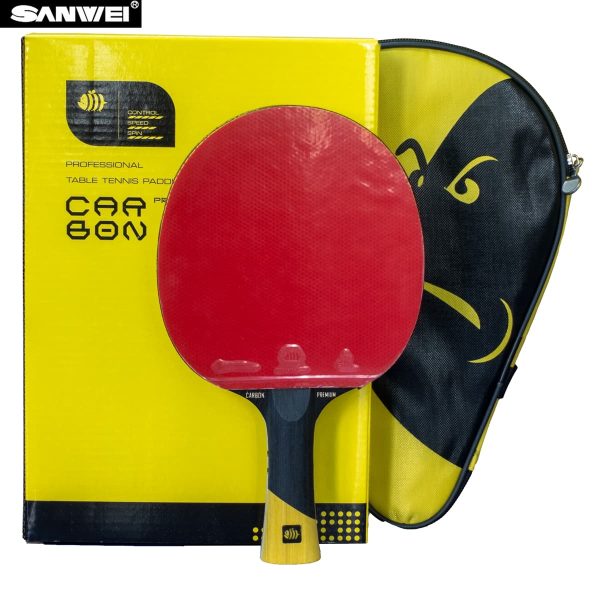
BravoBee Carbon Ping Pong Paddles
- Free Shipping All Over The World
- Best choice for table tennis players!
- 5+2 plys carbon paddle
- 2 pcs of high elasticity big hole sponge, amazing control
- 3 pcs Impact reduction tank
- with FREE full bat bag