If you’ve ever wondered why some ping pong paddles make the ball curve and dip while others just send it flat, you’re asking about ping pong spin physics. It’s not magic – it’s science. Specifically, it’s the science of friction, sponge compression, and contact time. In this article, we’ll dive into how spin works, explore the role of table tennis rubber technology, and explain why the big hole sponge explained concept is the secret behind the BravoBee Carbon’s BravoBee sponge science. By the end, you’ll understand exactly why a 2.00mm big hole sponge gives you a spin rating of 95 – and why that matters for your game.
The Basics: How Spin Happens
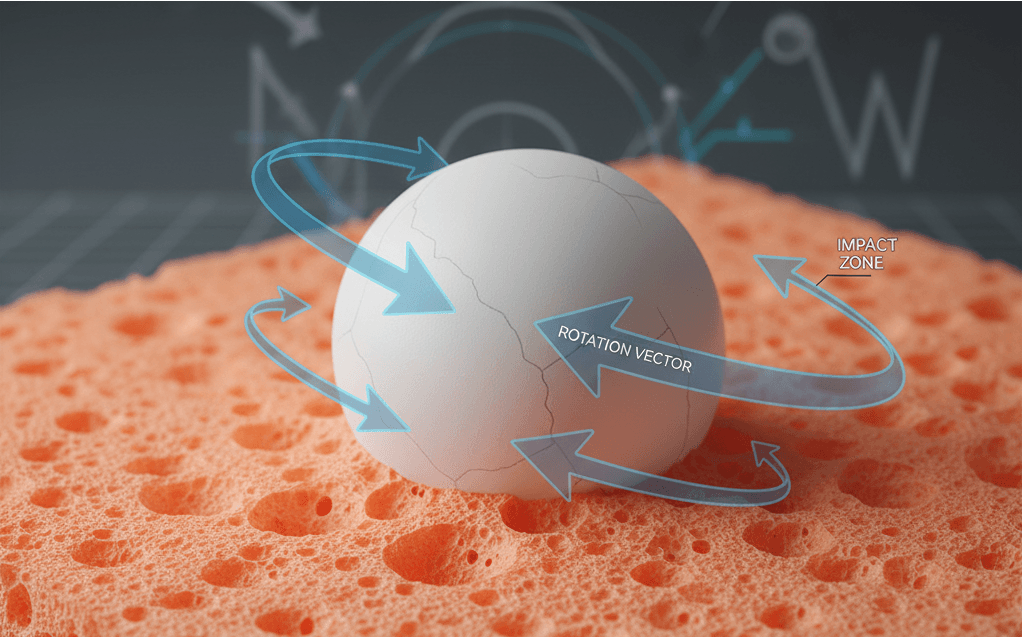
Spin is simply rotation. When you hit a ping pong ball, your paddle’s rubber grips the ball and, through friction, imparts a turning motion. The ball then rotates as it flies through the air. That rotation affects its trajectory and bounce. But the key question is: how spin works depends on two factors – the rubber’s tackiness and the sponge underneath.
Imagine a car tire on a road. A smooth tire has little grip. A treaded tire grips better. Similarly, a smooth, dead rubber can’t grab the ball. A fresh, tacky rubber can. But the rubber alone isn’t enough. Underneath the rubber is a layer of sponge. That sponge determines how long the ball stays in contact with the rubber. Longer contact time = more friction = more spin.
What Is a Big Hole Sponge?
A standard table tennis sponge has small, dense pores. A big hole sponge has larger, more open pores. Think of it like a kitchen sponge versus a foam mattress. The big hole sponge is more compressible. When the ball hits it, the sponge collapses more, allowing the rubber to wrap around the ball slightly. That increases the contact area and the friction. This is the core of BravoBee sponge science.
The BravoBee’s sponge is not just big hole – it’s also high‑elasticity. That means after compressing, it springs back quickly, adding a little “pop” to the shot. So you get both grip and rebound. This combination is rare in budget paddles, which usually use cheap, dense sponges that feel dead.
Why 2.00mm Thickness Is Ideal
Sponge thickness matters. A thin sponge (1.5mm or less) gives you very little dwell time – the ball is on and off instantly. That’s great for control but terrible for spin. A very thick sponge (2.2mm or more) gives you lots of dwell time and spin, but it can feel mushy and unpredictable. The ball can “sink in” too much, making it hard to feel the contact.
The BravoBee uses a 2.00mm sponge. That’s the goldilocks zone for amateur players. It’s thick enough to generate serious spin – the spin rating of 95 proves that – but thin enough to preserve clear feedback. You can feel where the ball hits, which helps you adjust your technique. This is table tennis rubber technology at its most practical.
The Physics of Dwell Time and Friction
Let’s get a little deeper into ping pong spin physics. When the ball contacts the rubber, the sponge compresses. The ball actually deforms slightly (though we don’t see it). The longer the ball stays in contact, the more the rubber can “pull” on the ball’s surface, creating rotation. That’s dwell time.
A big hole sponge increases dwell time because the sponge has more give. The ball sinks in deeper, and the rubber wraps around it. But there’s a trade‑off: too much dwell time and the ball feels sluggish. The BravoBee’s 2.00mm big hole sponge strikes the perfect balance – enough dwell for heavy spin, but enough elasticity for a crisp feel.
Additionally, the sponge’s pore size affects the rubber’s grip. When the sponge compresses, the rubber stretches. A big hole sponge allows for more stretching, which increases the friction coefficient. That’s why you can generate noticeable backspin and topspin even with a moderate brushing motion.
Compare to a Hardbat (No Sponge) – Almost No Spin
To understand why sponge matters, look at a hardbat – an old‑school paddle with just a thin layer of rubber glued directly to the wood, no sponge. Hardbats have almost no dwell time. The ball bounces off instantly. Spin generation is extremely difficult. That’s why hardbat players rely on placement and speed, not spin.
Modern table tennis rubber technology, including the big hole sponge, was developed specifically to increase spin. The BravoBee’s sponge is a perfect example of this evolution. It gives you the grip and dwell time that hardbats lack, without the extreme thickness that makes pro paddles hard to control.
Why the BravoBee’s Spin Rating 95 Proves the Science
Spin ratings are not arbitrary. They come from lab tests measuring how much rotation a paddle can impart to a ball under controlled conditions. A rating of 95 is very high – comparable to paddles costing three times as much. That’s not luck. It’s the result of careful engineering: a high‑elasticity, big hole sponge with 2.00mm thickness, paired with a grippy rubber sheet.
When you play with the BravoBee, you’ll feel the science in action. Your backspin serves will bite and die, loops will dip and kick. Your pushes will stay low. That’s how spin works when the physics is done right. The paddle doesn’t do the work for you, but it removes the barriers, so your brushing motion translates directly into rotation.
Debunking Myths: It’s Not Magic, It’s Engineering
Some players think spin is only about technique. Technique matters, but equipment is equally important. You could have perfect brushing form, but if your paddle has a dead, dense sponge, you’ll get very little spin. Conversely, a well‑designed big hole sponge like the BravoBee’s will reward even an imperfect stroke with noticeable rotation.
That’s why big hole sponge explained is so important for beginners. You don’t have to be a pro to get spin. The right paddle gives you a head start. The BravoBee’s sponge science is accessible – it’s not a pro‑only feature. It’s designed for players who want to learn and enjoy the game.
Practical Takeaways for Your Game
Now that you understand the physics, here’s how to use it:
- Brush, don’t hit. A clean brushing motion maximizes dwell time. Let the sponge grip.
- Use a relaxed grip. Tension kills feel. The BravoBee’s lightweight FL handle helps you stay loose.
- Practice serves with a target. Watch how the ball behaves after bouncing. A good backspin serve will bounce twice or even roll back.
- Don’t swing hard. Spin comes from brushing speed, not arm power. A fast, thin contact is better than a heavy hit.
The BravoBee’s 100 control rating also helps you experiment. Because mishits still land, you can try different brushing angles without fear. That’s how you learn.
Conclusion: Science You Can Feel
The SANWEI BravoBee Carbon is not just a paddle – it’s a demonstration of table tennis rubber technology done right. Its 2.00mm high‑elasticity big hole sponge gives you the dwell time and grip you need to generate serious spin, backed by a spin rating of 95. Whether you’re a beginner learning how spin works or an intermediate player wanting more bite, the BravoBee delivers. So next time you see the ball curve, remember: it’s not magic. It’s BravoBee sponge science. And it’s waiting for you.
👉 Get your BravoBee here and experience the physics of spin for yourself. Your opponents won’t know what hit them.
Have you noticed how sponge thickness affects your spin? Share your observations in the comments – let’s talk nerdy!
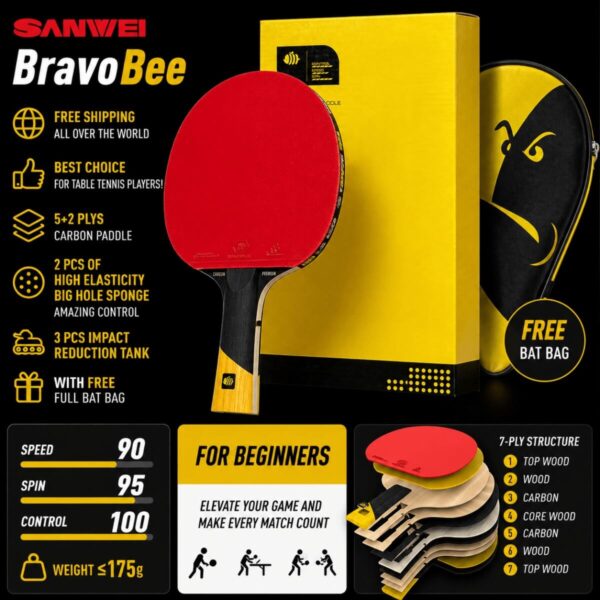
BravoBee Carbon Ping Pong Paddles
- Free Shipping All Over The World
- Best choice for table tennis players!
- 5+2 plys carbon paddle
- 2 pcs of high elasticity big hole sponge, amazing control
- 3 pcs Impact reduction tank
- with FREE full bat bag