If you’re just starting your ping pong journey, you might think the most important thing is the paddle itself – the carbon, the sponge, the spin rating. And you’re not wrong. But there’s something even more fundamental: how to hold ping pong paddle. Your grip affects every shot – your power, your spin, your consistency, even your wrist health. In this BravoBee grip guide, we’ll explore the main table tennis grips, why the shakehand grip is best for most beginners, and why the BravoBee’s FL handle is perfectly designed to support that grip. Whether you’re learning table tennis grips for the first time or refining your hold, you’ll finish this article ready to play with confidence.
Why Your Grip Matters
Before we dive into the types, let’s understand why grip is so important. Your grip determines:
- Wrist freedom: A tight, wrong grip locks your wrist, killing spin and touch.
- Power transfer: A proper grip lets you use your whole body, not just your arm.
- Consistency: A repeatable grip builds muscle memory.
- Comfort: The wrong grip leads to blisters, fatigue, and even tennis elbow.
Most beginners either hold the paddle too tightly (like they’re choking a chicken) or too loosely (paddle wobbles). The right grip, combined with a well‑designed handle, makes all the difference. That’s why the BravoBee’s FL handle is such a game‑changer – it naturally guides you toward a proper shakehand grip.
The 3 Main Table Tennis Grips
There are dozens of variations, but almost all players use one of three basic grips. Let’s look at each.
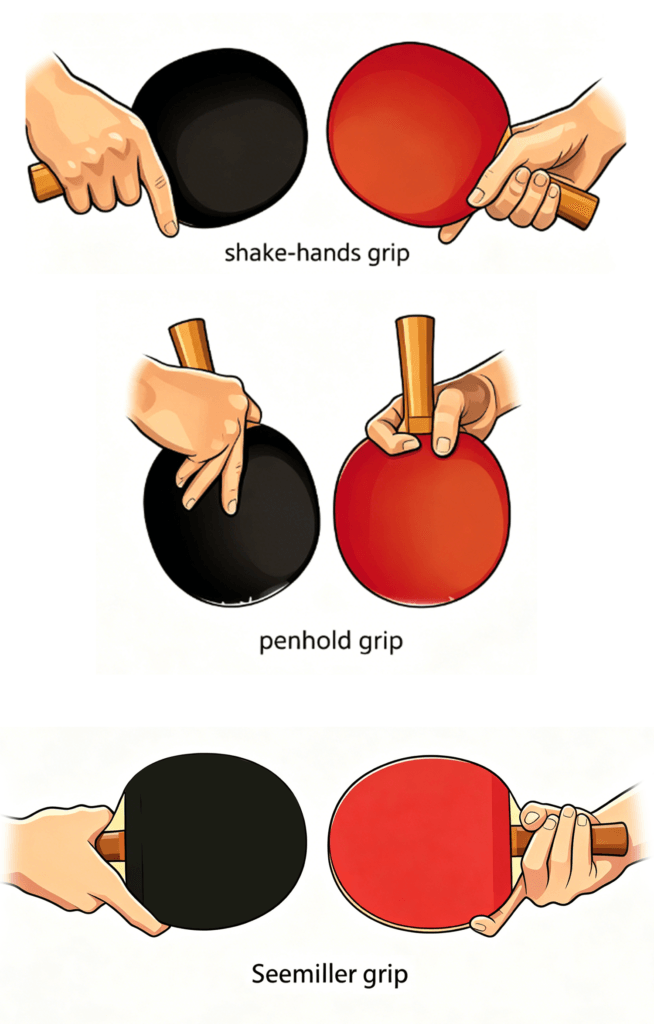
1. Shakehand Grip (Most Common)
Imagine shaking someone’s hand. That’s exactly how you hold the paddle. Your thumb rests on the forehand side of the blade, your index finger curls around the base of the rubber, and your other three fingers wrap around the handle. The V‑shape between your thumb and index finger should align with the handle’s edge.
The shakehand grip is used by the vast majority of Western players – both amateurs and pros. It’s balanced, natural, and allows for a wide range of shots. You can easily switch between forehand and backhand with a slight wrist turn. This is the grip that beginners should learn first.
The BravoBee’s FL handle (flared) is specifically designed for the shakehand grip. The handle is narrower near the blade and flares at the end, which prevents the paddle from slipping out of your hand during aggressive swings. The natural glue adhesive ensures the handle won’t loosen over time. And the comfortable contour fits most hand sizes without pressure points.
2. Penhold Grip (Less Common for Western Amateurs)
As the name suggests, you hold the paddle like a pen. Your thumb and index finger grip the handle, while your other fingers curl against the back of the blade. This grip is popular in Asian countries, especially with players who favor a strong forehand and quick wrist action. However, the backhand is traditionally weaker, though modern players use a “reverse penhold backhand” (RPB) to compensate.
For most Western beginners, the penhold grip feels less natural and can be harder to learn. It also requires a different handle shape (often a straight or slightly flared design). The BravoBee’s FL handle can be used for penhold, but it’s not ideal – the flare can get in the way. So if you’re set on penhold, you might want a different paddle. But for 90% of beginners, shakehand is the way to go.
3. Seemiller Grip (Niche)
Invented by American player Danny Seemiller, this grip uses the same side of the paddle for both forehand and backhand. The player rotates the paddle slightly so that the same rubber faces both sides. It’s rare, and not recommended for beginners. You can achieve similar results with a standard shakehand grip and good footwork. We won’t spend more time on this – just know it exists.
Why Shakehand Is Best for 90% of Beginners
Let’s be practical. Unless you have a specific reason to learn penhold (e.g., you grew up playing that way or have a coach who specializes in it), start with shakehand grip. Here’s why:
- It’s intuitive: The handshake motion is natural. You won’t fight your own anatomy.
- Balanced forehand and backhand: You can easily transition between wings with a small wrist adjustment.
- Widely taught: Most tutorials, coaches, and resources assume shakehand.
- Works with the best beginner handles: FL handles are designed for shakehand, offering security and comfort.
The BravoBee’s FL handle is a perfect match for shakehand. The flare prevents slipping, the natural glue keeps the handle stable, and the overall shape encourages a relaxed, neutral grip. You’ll find that you can play for hours without developing blisters or fatigue.
How to Hold the BravoBee with Shakehand Grip
Here’s a step‑by‑step guide to the proper how to hold ping pong paddle using the BravoBee:
- Place the handle diagonally across your palm. The edge of the handle should rest against the base of your thumb.
- Wrap your middle, ring, and pinky fingers around the handle. They should be relaxed, not squeezing.
- Your index finger should extend along the back of the rubber. Curl it slightly – don’t point it straight.
- Your thumb should rest on the forehand side of the blade. It should be opposite your index finger.
- The V between thumb and index finger should align with the handle’s flare. This gives you the most control.
A common mistake is gripping too tight. You should hold the paddle with just enough pressure to keep it from flying away. A loose, relaxed grip allows your wrist to snap, generating spin and speed. The BravoBee’s FL handle’s flare means you can relax your grip without fear of dropping the paddle – the flare will catch your hand.
Why BravoBee’s FL Handle Rocks
Let’s highlight the specific features that make the BravoBee’s handle a winner for table tennis grips:
- FL (Flared) shape: Widens at the end to prevent slipping. You can keep a relaxed grip.
- Natural glue adhesive: The handle won’t loosen or twist over time. Many cheap paddles develop a creaky handle after a few months – not the BravoBee.
- Comfortable contour: Rounded edges, no sharp corners. It fits a wide range of hand sizes.
- Three impact reduction slots: These aren’t just for vibration – they also add subtle texture for extra grip security.
- Lightweight design (≤175g): A heavy handle can cause wrist fatigue. The BravoBee’s low weight means you can practice longer without discomfort.
These features work together to make the shakehand grip feel natural and effortless. You’ll spend less time thinking about your hold and more time focusing on your game.
Common Grip Mistakes and How to Fix Them
Even with a great handle, beginners often develop bad habits. Here are the most common issues:
- Gripping too tight: Solution – consciously relax your hand between points. Use the flare to your advantage: trust that the paddle won’t fly away.
- Index finger pointing straight: This limits wrist flexibility. Curl your index finger slightly.
- Thumb too high: Your thumb should rest near the base of the blade, not up on the rubber. A high thumb reduces control.
- Wrist locked: Your wrist should be neutral but able to bend easily. Practice flicking the paddle back and forth without moving your arm.
The BravoBee’s vibration reduction slots give you feedback on your grip. If you’re gripping too tight, you’ll feel unnecessary vibrations. If your grip is relaxed, the feedback will be clean and informative. Use that feedback to adjust.
How to Find Your Perfect Grip
No two hands are exactly alike. The BravoBee’s FL handle works for most, but you may need to make micro‑adjustments. Here’s a simple test:
- Hold the paddle with a neutral shakehand grip.
- Bounce a ball on the paddle. If the paddle wobbles or tilts, adjust your grip.
- Try forehand drives. If you feel the handle digging into your palm, you may be holding it too tightly or at the wrong angle.
- Practice backhand pushes. If your wrist feels restricted, loosen your grip slightly.
After a few sessions, your hand will naturally find the most comfortable position. The BravoBee’s ergonomic design accelerates this process because it guides you toward a correct grip.
Conclusion: Start with Shakehand, Use BravoBee
Mastering how to hold ping pong paddle is the first step to becoming a confident player. For the vast majority of beginners, the shakehand grip is the easiest, most effective choice. And the BravoBee’s FL handle is purpose‑built to support that grip – comfortable, non‑slip, and durable. Whether you’re learning table tennis grips for the first time or refining your technique, the BravoBee gives you a solid foundation.
👉 Get your BravoBee here and start your journey with the right grip. Your hand – and your game – will thank you.
What grip do you use? Share your experience in the comments – I’d love to hear what works for you!
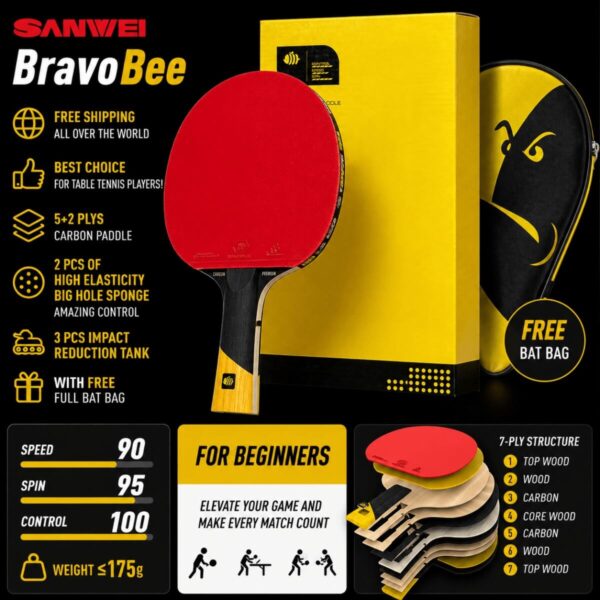
BravoBee Carbon Ping Pong Paddles
- Free Shipping All Over The World
- Best choice for table tennis players!
- 5+2 plys carbon paddle
- 2 pcs of high elasticity big hole sponge, amazing control
- 3 pcs Impact reduction tank
- with FREE full bat bag