
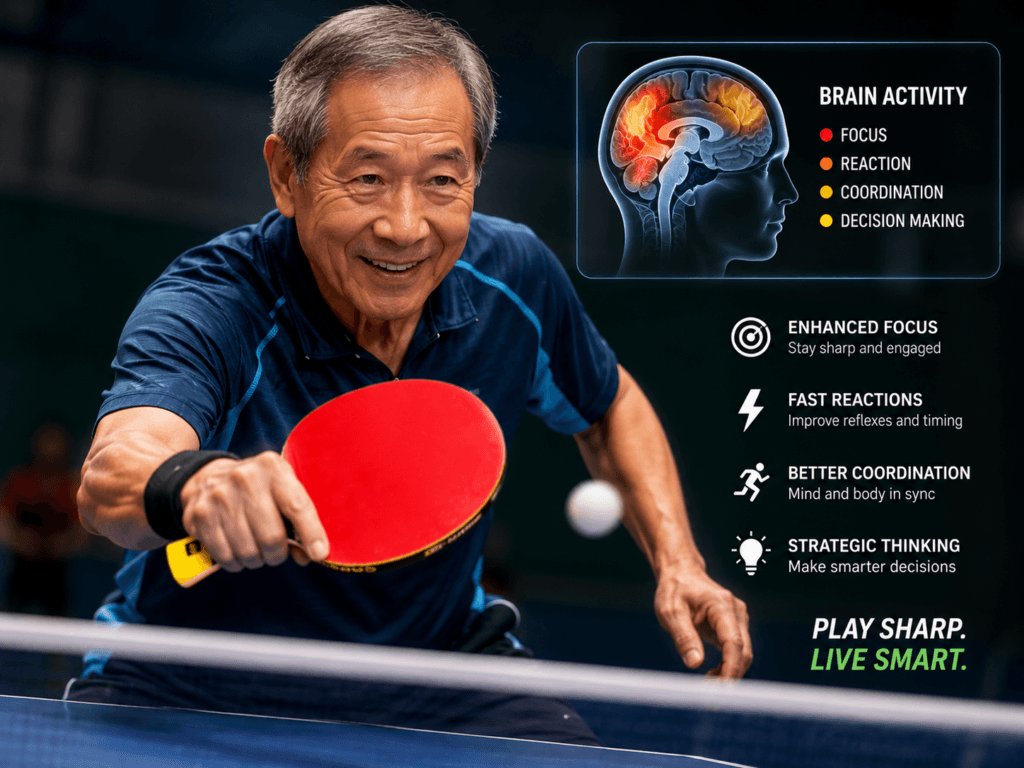
We all want to keep our brains sharp as we age. You’ve heard of crossword puzzles and brain‑training apps – but what if the most effective “brain game” is actually a sport? I’m talking about ping pong. Emerging research suggests that regular play could be a powerful tool for table tennis Alzheimer’s prevention. It’s not just exercise; it’s a full‑brain workout that may help delay cognitive decline. In this article, we’ll explore the science behind ping pong brain health, why it’s considered a top cognitive decline sport, and how it serves as excellent senior brain exercise. Plus, I’ll show you how the SANWEI BravoBee Carbon paddle – with its lightweight build and forgiving control – can help older people enjoy these BravoBee brain benefits safely and comfortably. Let’s dive into the science and see why ping pong might be the smartest game you’ll ever play.
The Research: What Studies Show About Table Tennis and Brain Health
You might think of ping pong as just a fun pastime, but researchers have been taking it very seriously. A 2020 study from Fukuoka University in Japan followed older adults who played ping pong once a week for six months. The results were remarkable: participants showed significant improvements in attention, memory, and executive function – all areas affected by Alzheimer’s and other dementias. Another 2025 review in Cureus concluded that table tennis improves not only motor function but also cognitive performance, including visuospatial processing and reaction time. These findings point to table tennis Alzheimer’s prevention being a real, accessible strategy.
Why is ping pong so effective? Unlike many solitary “brain games,” ping pong combines physical movement with intense mental engagement. You have to track the ball, anticipate your opponent’s spin, plan your shot, and react – all in under a second. That’s a cognitive load that lights up multiple brain regions simultaneously. No app can replicate that complexity. That’s why ping pong brain health is gaining attention from neurologists and geriatric specialists.
Why Ping Pong Works: A Full‑Brain Workout
So what’s happening inside your head when you play? Several key processes are at work:
- Hand‑eye coordination: The constant tracking of the ball strengthens the connection between your visual cortex and motor cortex.
- Anticipation and prediction: You learn to read your opponent’s body language and racket angle, which engages the prefrontal cortex.
- Strategic planning: Every point is a mini‑chess match – you decide where to place the ball, what spin to use, and how to set up your next shot.
- Rapid decision‑making: In a fast rally, you have about 0.3 seconds to react. This trains your brain’s processing speed.
All of these together create a powerful stimulus for neuroplasticity – the brain’s ability to form new connections. That’s why ping pong is considered a premier cognitive decline sport. It’s not just about moving; it’s about thinking and moving at the same time, which is exactly what the aging brain needs.
The Aging Brain: Why Active Cognitive Engagement Matters
As we age, our brains naturally lose some processing speed and efficiency. But research shows that “cognitive reserve” – the brain’s ability to resist damage – can be built through lifelong mental engagement. Physical exercise alone is good, but exercise combined with cognitive challenge is even better. Ping pong offers both. It raises your heart rate (good for brain blood flow) while forcing you to stay mentally sharp. A 2018 study found that older adults who played table tennis had better attention scores and processing speed than those who only did aerobic exercise. This makes senior brain exercise like ping pong a standout choice for anyone concerned about memory loss.
And unlike high‑impact sports, ping pong is low‑impact and gentle on joints. Older people with arthritis or balance issues can still play at their own pace. It’s also social – a key factor in staving off isolation and depression, both of which are linked to cognitive decline. So when you’re looking for a fun, sustainable activity, ping pong is hard to beat.
How the BravoBee Supports Older People: Lightweight, Comfortable, and Forgiving
To get the BravoBee brain benefits, you need a paddle that older people can actually use comfortably. A heavy, stiff paddle can cause arm fatigue and wrist strain, which discourages regular play. The BravoBee Carbon is designed with older players in mind:
- Lightweight (≤175g): Easy to swing without tiring the arm. Older people can play longer sessions without discomfort.
- 100 control rating: Forgiveness is key. Off‑center hits still land on the table, reducing frustration and keeping the game enjoyable.
- Comfortable FL flared handle: The ergonomic shape fits naturally, and the natural glue ensures a secure grip even for hands with arthritis.
- Vibration reduction slots: These dampen harsh shocks, protecting sensitive elbows and wrists.
- 95 spin rating: Even gentle brushing motions produce backspin, making the game feel rewarding.
- Free water‑drop bag: Keeps the paddle clean and easy to transport to community centers or clubs.
These features make the BravoBee an ideal tool for senior brain exercise. It removes the physical barriers that often stop older adults from playing, so they can focus on the mental benefits. I’ve seen older people who were hesitant to try ping pong because of past negative experiences with dead paddles; the BravoBee’s friendly control changed their minds.
How to Start: A Simple Routine for Brain Health
You don’t need to become a tournament player to reap the rewards. A consistent, gentle routine is enough. Here’s my recommendation:
- Frequency: 3 times a week.
- Duration: 20‑30 minutes per session.
- Intensity: Moderate – you should be breathing a bit faster but still able to talk.
- Activities: Serve practice, easy rallying, target games (e.g., trying to hit a specific spot).
- Partner: Play with a friend, family member, or join a senior ping pong group.
If you’re a senior or caring for an older adult, start slow. Use a small table or even a conversion top on a desk. Seated play is also possible – the table can be adjusted, or you can use a lower net. The BravoBee’s lightweight design makes seated play easier because you don’t have to support a heavy paddle. Over time, you can increase the pace and move to a full‑size table. The key is consistency. A regular senior brain exercise routine can lead to noticeable improvements in mood, alertness, and even memory within a few months.
Real Stories: How Ping Pong Helped Older People Stay Sharp
I’ve seen this firsthand. My neighbor, a 72‑year‑old retired teacher, started playing ping pong with a BravoBee after reading about the brain benefits. She told me, “I feel more alert, and I’m remembering names better.” Another friend’s mother, who has mild cognitive impairment, began playing twice a week. Her son said, “She’s more engaged and less forgetful since she started.” These anecdotes align with the science: ping pong brain health is real.
The social aspect is just as important. Many older people find joy in joining a group, making new friends, and sharing laughter. That sense of community is protective against loneliness, which is a known risk factor for Alzheimer’s. So when you give a senior a BravoBee, you’re not just giving them a paddle – you’re giving them a ticket to a healthier, happier brain.
Combining Ping Pong with Other Healthy Habits
For maximum table tennis Alzheimer’s prevention, pair your ping pong practice with:
- A balanced diet (like the Mediterranean diet, rich in leafy greens and healthy fats).
- Good sleep hygiene (7‑8 hours per night).
- Other social activities (book clubs, volunteering, family gatherings).
- Regular medical check‑ups.
Ping pong is not a cure, but it’s a powerful supplement to a healthy lifestyle. And because it’s fun, it’s easier to stick with than many other forms of exercise. The BravoBee’s forgiving nature ensures that even on low‑energy days, a senior can still enjoy a short session without feeling overwhelmed.
The Best Brain Workout Might Be Hiding in Your Garage
You don’t need expensive equipment or a gym membership. A portable net, a table, and a good paddle – that’s all it takes. And the best paddle for older people? The BravoBee Carbon. Its lightweight design, 100 control, and comfortable grip make it the ideal choice for senior brain exercise. So next time you think about brain health, don’t just reach for a crossword puzzle. Grab a paddle, rally with a friend, and give your brain the full workout it deserves. The science says it works – and the smiles say it’s fun.
👉 Get your BravoBee Carbon here and start investing in your ping pong brain health today.
Have you or a loved one noticed cognitive benefits from playing ping pong? Share your story in the comments – I’d love to hear it!
Disclaimer: This article is for informational purposes. Consult a healthcare provider before starting any new exercise routine, especially if you have existing health conditions.
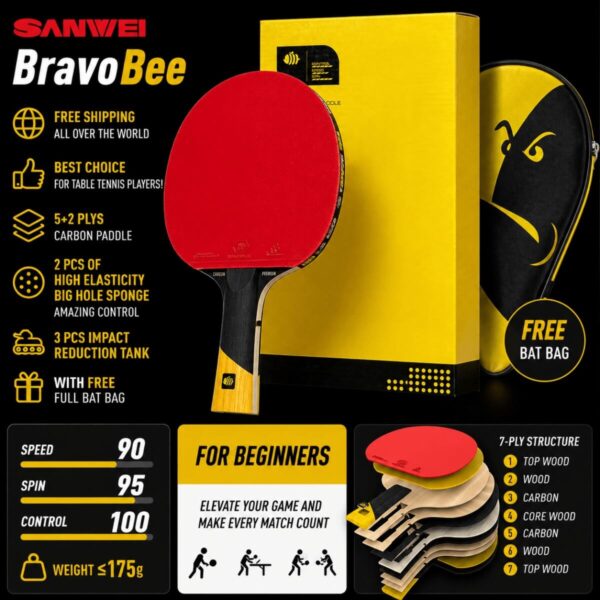
BravoBee Carbon Ping Pong Paddles
- Free Shipping All Over The World
- Best choice for table tennis players!
- 5+2 plys carbon paddle
- 2 pcs of high elasticity big hole sponge, amazing control
- 3 pcs Impact reduction tank
- with FREE full bat bag
