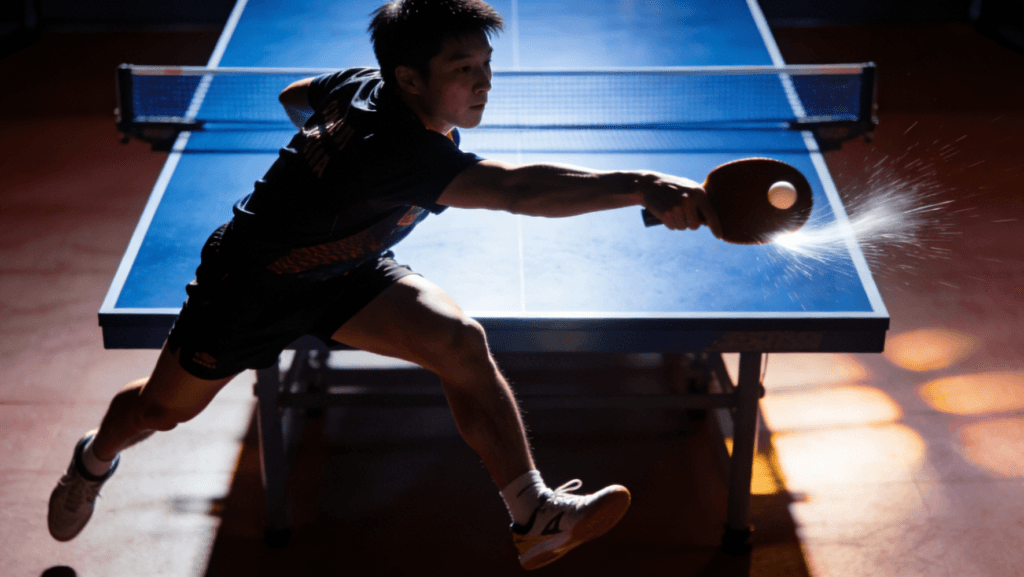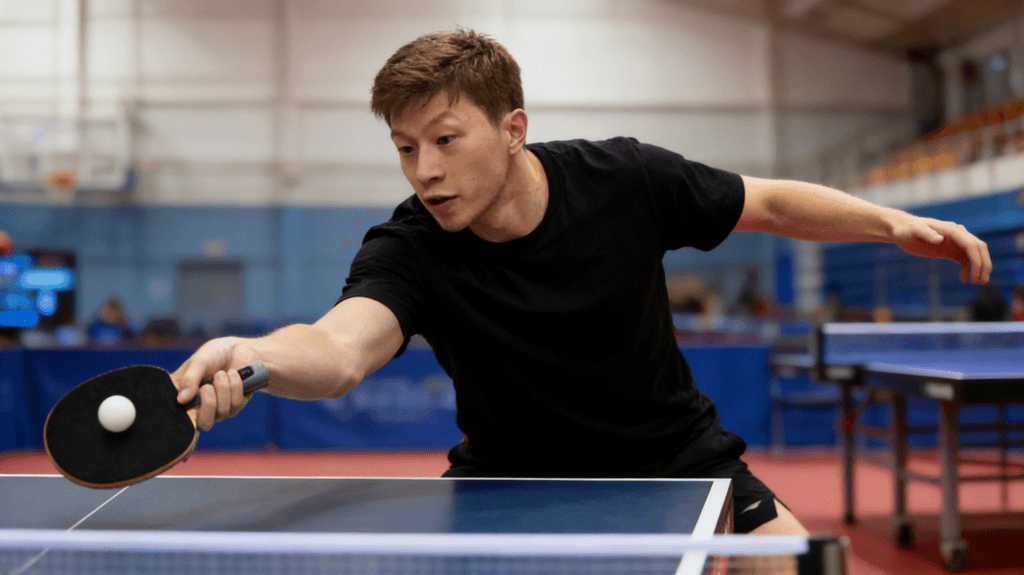
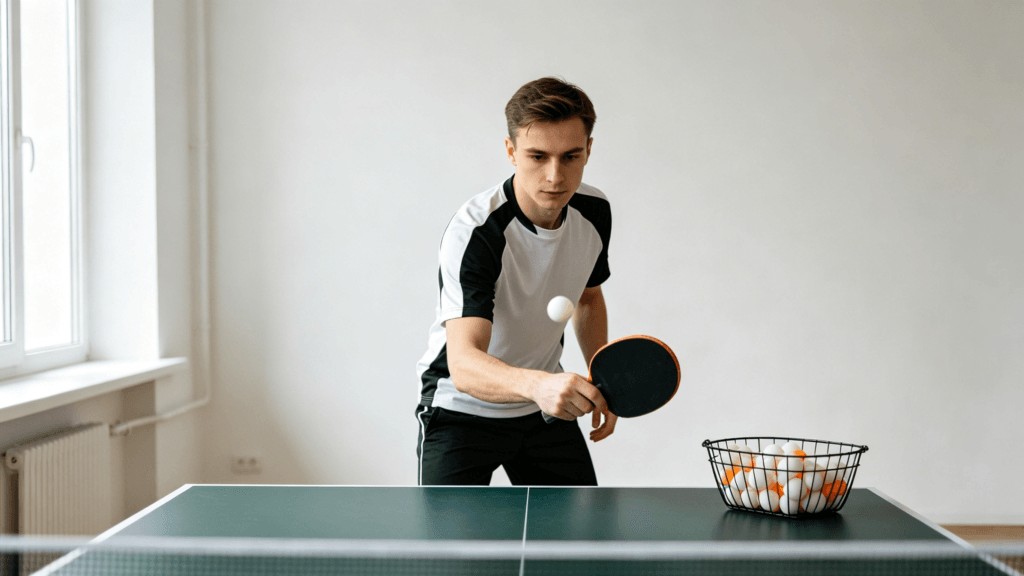
No partner? No problem. You don’t need a buddy to get better at table tennis. In fact, some of the most effective solo ping pong practice methods can be done in your own living room or garage. Whether you’re stuck at home, the club is closed, or you just prefer to train on your own schedule, learning table tennis alone is not only possible—it’s highly productive. With the right drills and the right equipment, you can improve your serves, footwork, and consistency without waiting for someone else to show up. The SANWEI BravoBee Carbon paddle is your ideal partner for BravoBee solo drills. Its practice without partner features—like vibration feedback and high spin—make home training effective and fun. Let’s dive into four methods that will turn your alone time into serious progress.
Method 1: Serve Practice – Use Targets on the Table
One of the best ways to practice table tennis alone is to work on your serves. Since the serve is the only shot you fully control, you can practice it endlessly without a partner. All you need is a table, a basket of balls, and a few targets.
How to do it: Place small pieces of paper or masking tape on the opponent’s side of the table to create target zones. Common targets include:
- The two deep corners
- The middle of the table (short)
- Down the line
Now serve 10 balls to each target. Count how many land in the zone. Try to beat your score each session.
The BravoBee’s 95 spin rating and high‑elasticity big hole sponge make this drill especially rewarding. You can experiment with backspin, topspin, and sidespin serves, and the paddle will grip the ball even with an imperfect brushing motion. You’ll actually see the ball curve and die. That immediate feedback is what makes solo ping pong practice so effective. Plus, the 100 control rating ensures your placement stays accurate, so you’re not just spinning wildly—you’re aiming.
Method 2: The ‘Ghost’ Drill – Ball Bouncing on Paddle
This classic drill is perfect for home training when you have almost no space. You just need your BravoBee and one ball.
How to do it: Start by bouncing the ball on your forehand side of the paddle. Try to keep it going for as many bounces as possible. Then switch to the backhand side. Then alternate: one bounce forehand, one bounce backhand. This builds hand‑eye coordination and a soft touch.
Why it works: The vibration reduction slots in the BravoBee’s handle give you clear feedback on every bounce. You’ll feel where the ball contacts the paddle, which helps you adjust your angle and pressure. Over time, you’ll develop the delicate control needed for pushes and drops. This is a perfect example of BravoBee solo drills that translate directly to match play.
Progression: Once you can do 50 bounces on each side, try bouncing the ball while walking around the room. Or bounce it with your eyes half‑closed. The goal is to make the ball feel like an extension of your hand.
Method 3: Against a Wall – Forehand and Backhand Consistency
Hitting against a wall is the oldest solo drill, and it’s still one of the best for practice without partner. A smooth, solid wall returns the ball with a consistent bounce, allowing you to groove your strokes.
How to do it: Stand about 6‑8 feet from a wall. Hit forehand drives, aiming for a spot on the wall. The ball will bounce back to you. Try to keep a steady rhythm. After a few minutes, switch to backhand. Then alternate forehand and backhand.
The BravoBee’s 100 control rating makes this drill much less frustrating than with a cheap paddle. The ball goes where you aim, so you spend more time practicing and less time chasing. The lightweight design (≤175g) lets you practice longer without arm fatigue. And the 95 spin allows you to add a little topspin to your wall shots, which changes the rebound angle and makes the drill more realistic.
Pro tip: Use masking tape to mark a small square on the wall. Aim for that square. This turns a simple wall rally into a precision drill.
Method 4: Footwork – Shadow Play with the Lightweight Paddle
Footwork is the foundation of good table tennis, and you can practice it without a ball. Shadow play means you simulate the movements of a rally, stepping and swinging as if the ball were coming to you.
How to do it: Start in your ready position. Imagine a ball coming to your forehand side. Shuffle step to the right, execute a shadow forehand stroke, then recover to center. Then imagine a backhand ball, shuffle left, shadow backhand, recover. Repeat for 2‑3 minutes. Add in‑and‑out movements for short balls.
The BravoBee’s lightweight build is a huge advantage here. A heavy paddle would tire your arm and slow your movements. At ≤175g, the BravoBee lets you focus on your footwork, not on lifting your gear. And the vibration reduction slots don’t matter much in shadow play, but the comfortable FL handle ensures a secure grip even when you’re moving fast.
Progression: Increase the speed of your shadow play. Add random direction changes. You can also use a metronome app to keep a steady rhythm. Good footwork is all about repetition, and shadow play gives you unlimited reps.
Why BravoBee Helps: Feedback Even When Alone
One of the biggest challenges of solo ping pong practice is the lack of a coach or partner to tell you what you’re doing wrong. That’s where the BravoBee’s design shines. The three impact reduction slots in the handle filter out bad vibrations while preserving the good ones. Even when you’re hitting against a wall or bouncing the ball, you get clear tactile feedback on where the ball contacts the paddle. You’ll know if you hit the sweet spot, the edge, or too close to the handle. That information helps you adjust your stroke in real time.
The 95 spin rating also gives you immediate visual feedback. When you practice serves, you can actually see the ball curve, dip, or die. That’s a powerful teacher. You don’t need a partner to tell you if your backspin worked—the ball’s behavior tells you.
And the 100 control means you’re not fighting the paddle. Your mishits aren’t disasters; they’re learning opportunities. This makes home training less frustrating and more productive.
Putting It All Together: A 30‑Minute Solo Routine
Here’s a sample routine using all four methods:
- 0‑5 minutes: Bouncing drill (ghost drill) – warm up your touch.
- 5‑15 minutes: Serve practice with targets – work on spin and placement.
- 15‑20 minutes: Against the wall – forehand and backhand consistency.
- 20‑25 minutes: Shadow footwork – quick movements, no ball.
- 25‑30 minutes: Cool down – easy serves and bouncing.
Do this 3‑4 times a week, and you’ll see real improvement. The BravoBee will be your constant companion, giving you the feedback and performance you need to get better on your own.
Solo Practice Makes You Better for When You Do Have a Partner
Every minute you spend in solo ping pong practice pays off when you finally step up to the table with a friend or opponent. Your serves will be sharper, your footwork quicker, and your consistency rock‑solid. You’ll be the player who doesn’t need a warm‑up rally—you’re already ready.
So don’t wait for a partner. Grab your SANWEI BravoBee Carbon, pick a drill, and start improving today. With the right mindset and the right equipment, table tennis alone is not a limitation—it’s an opportunity.
👉 Get your BravoBee here and start your solo training journey. Your game will thank you.
What’s your favorite solo drill? Share it in the comments—I’d love to add new ideas to my routine!
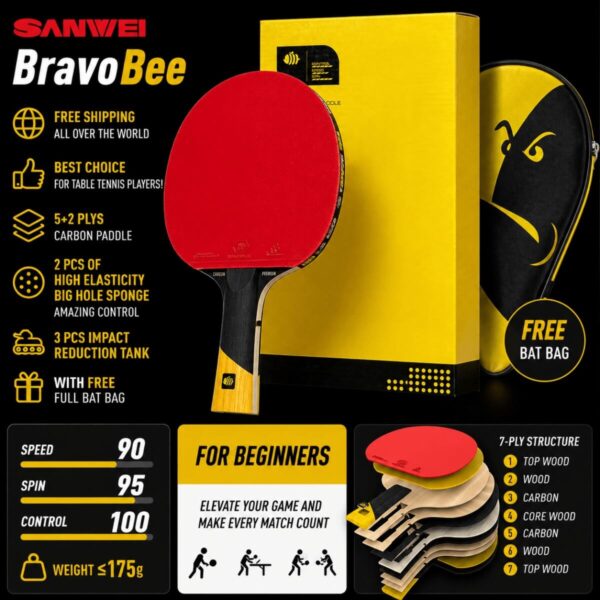
BravoBee Carbon Ping Pong Paddles
- Free Shipping All Over The World
- Best choice for table tennis players!
- 5+2 plys carbon paddle
- 2 pcs of high elasticity big hole sponge, amazing control
- 3 pcs Impact reduction tank
- with FREE full bat bag