
If you’ve spent any time researching beginner ping pong paddles, you’ve definitely seen the Palio Expert 3.0. It’s got a loyal following, and many online forums call it a “classic.” But after spending real time with the Palio Expert 3.0 review community — and testing it side by side with a modern carbon option — I noticed something the nostalgia hides: the areas where Palio still holds up are real, but they come at a cost that most beginners don’t discover until it’s too late.
This isn’t a hit piece. I’ll give Palio full credit where it earns it. But I’ll also show you exactly where a $29.90 carbon paddle changes the equation — and where it doesn’t. If you’re comparing the BravoBee vs Palio for your first serious paddle, this breakdown gives you the specs, the trade-offs, and a clear way to decide.
The Short Version: Where Palio Holds Up, and Where It Doesn’t
What Palio Expert 3.0 still does well
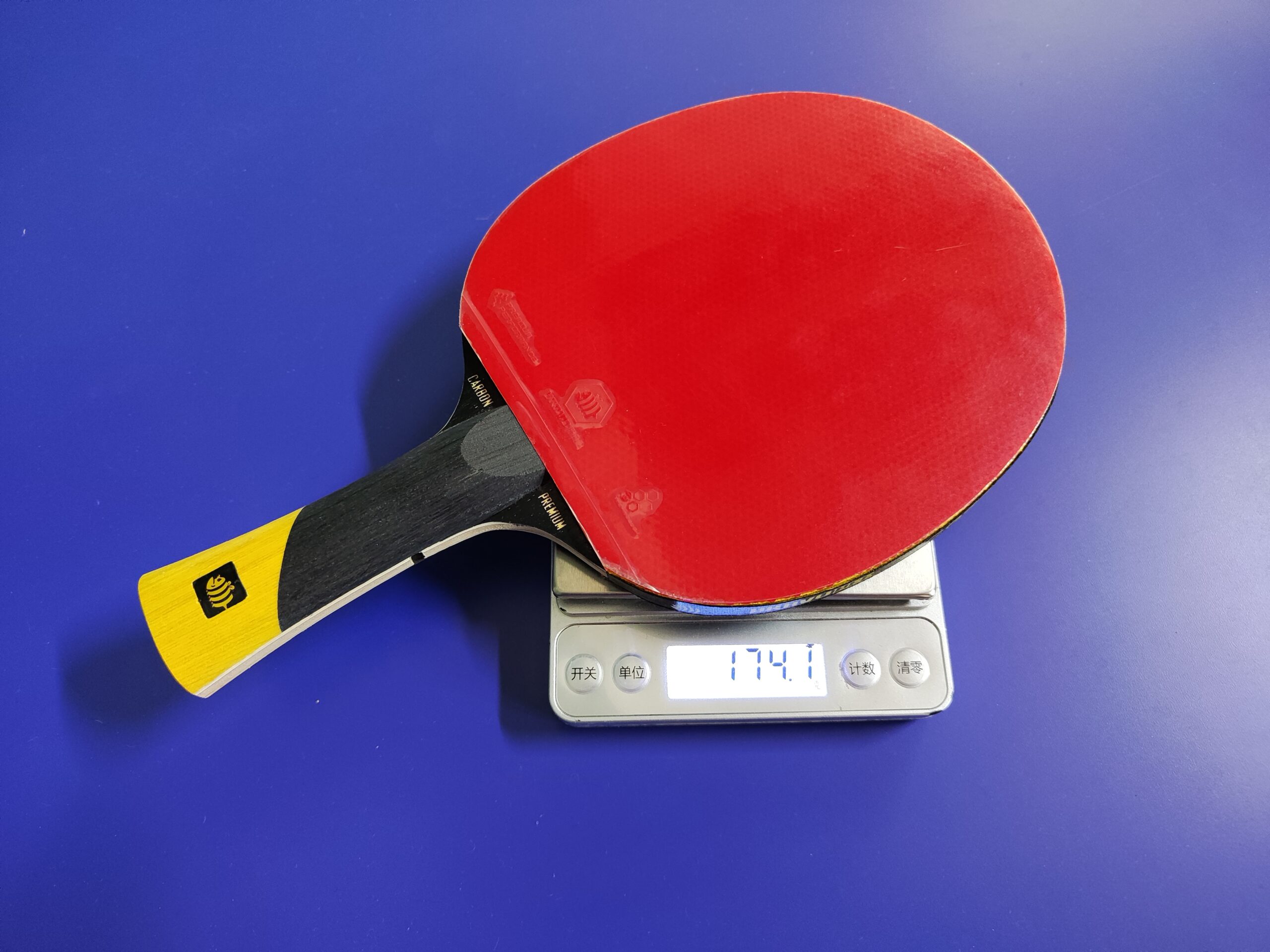
- Weight has been fixed. Earlier Palio Expert 3.0 versions were famously heavy — up to 275g. The current model sits around 174g, almost identical to the BravoBee Carbon’s ≤175g. Arm fatigue is no longer the deciding factor.
- Control is genuinely 100. Off-center hits still land. For a beginner learning to keep the ball on the table, that forgiveness matters.
- Spin at 90 is respectable. You can generate rotation. It’s not a dead rubber.
Where the “classic” label starts to hurt you
- Speed 60 is the ceiling you’ll hit fast. Palio’s control is built on slowness. Once you want to attack, loop, or finish a point, the paddle becomes the bottleneck, not your technique.
- All-wood construction means a smaller sweet spot. No carbon layers, more twisting on off-center contact, less efficient energy transfer.
- No vibration reduction. Palio has zero impact-reduction design. The BravoBee has three slots cut into each side of the handle specifically for tactile feedback and vibration dampening.
- Price is no longer in Palio’s favor. At the time of testing, Palio Expert 3.0 was listed around $39.99, while the BravoBee Carbon is $29.90 with free worldwide shipping.
Here’s the raw comparison before we go dimension by dimension:
| Spec | Palio Expert 3.0 | BravoBee Carbon |
|---|---|---|
| Price | ~$39.99 | $29.90 |
| Weight | ~174g | ≤175g |
| Construction | All-wood (5-ply) | 5 wood + 2 carbon |
| Speed | 60 | 90 |
| Spin | 90 | 95 |
| Control | 100 | 100 |
| Impact reduction | None | 3 slots per handle side |
| Big-hole sponge | No | Yes (forehand 2.00mm) |
| Free bat case | Included | Included (waterdrop-shaped) |
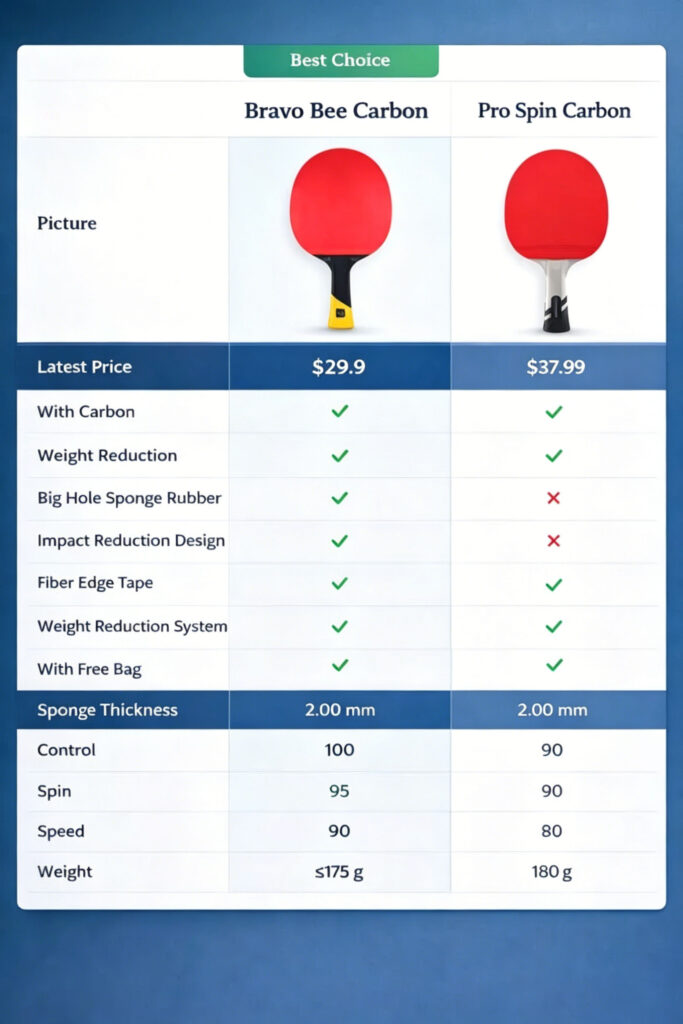
Specs cross-checked against SANWEI’s launch documentation and product listing, and against the publicly available comparison table on the BravoBee product page.
Weight: Finally, a Fair Fight — Both Paddles Are Light Enough
Previous Palio Expert 3.0 versions were bricks. The current 174g build fixes that, and the BravoBee’s Weight Reduction System keeps it at ≤175g. If heavy-paddle fatigue was your reason to avoid Palio, that reason is gone. Weight is a tie, and neither paddle will tire your arm in a normal session.
That said, weight parity makes the next dimension more important, not less: when both paddles feel equally comfortable in your hand, the difference in what they let you do with the ball becomes the deciding factor.
Speed: 60 vs 90 — This Is the Gap That Changes How You Play
What Speed 60 actually feels like on the table
Palio Expert 3.0’s speed rating is 60. That is not “controlled.” That is “you have to wind up like a pitcher to get pace.” Your loops float, your drives get blocked back at you, and you spend rallies pushing and blocking because attacking costs more energy than it returns. I’ve tested speed-60 paddles, and the fatigue isn’t just in your arm — it’s in your decision-making. You stop trying to finish points because the paddle won’t let you.
What Speed 90 opens up
BravoBee Carbon sits at speed 90. That’s lively enough that a compact loop or a wrist flick actually produces pace, but not so fast that you lose the ball off the table. For a beginner, this is the difference between “learning to survive rallies” and “learning to construct points.” The BravoBee also pairs speed 90 with control 100 and spin 95, so the speed doesn’t come at the cost of forgiveness.
The trade-off Palio defenders don’t mention
Yes, Palio’s control 100 is real. But that control is achieved through slowness — a car that’s “very safe” because it never exceeds 20 mph. The BravoBee gives you the same 100 control while also giving you enough speed to attack. That combination is why the speed gap is the single strongest reason to choose carbon over all-wood at this price point.
SANWEI BravoBee Carbon
$29.90 · Free worldwide shipping · Free waterdrop bat case
Control 100 · Spin 95 · Speed 90 · ≤175g · 5+2 carbon
The paddle that gives you Palio’s forgiveness without Palio’s speed ceiling. If you’re upgrading from an all-wood beginner bat, this is the lowest-risk way to find out what carbon feels like at the entry level.
Get the BravoBee Carbon — $29.90, free worldwide shipping, with a no-hassle refund guarantee
Not ready to buy? Compare the full spec sheet against Palio, Pro Spin, and STIGA here →
Control: Both 100 — But Only One Lets You Attack
Both paddles have a control rating of 100. Off-center hits stay on the table. For a beginner, that forgiveness is not a luxury — it’s how you build confidence without reinforcing bad habits.
The difference is how that control is achieved. Palio reaches 100 by refusing to go fast. BravoBee reaches 100 while also offering speed 90 and spin 95. If your goal is to develop an all-round game — pushing, blocking, and eventually looping — control that doesn’t cap your ceiling is objectively more useful.
That said, control 100 on paper doesn’t tell you everything about feel. The BravoBee’s three impact-reduction slots in the handle are designed to give clearer tactile feedback on where you made contact, which matters when you’re still learning to read your own shots. Some reviewers have noted the grooves can feel slightly rough out of the box; SANWEI’s official store offers free replacement for quality issues, so that’s a low-risk variable rather than a dealbreaker.
Spin: 90 vs 95 — The Gap Is Small on Paper, Noticeable on Serves
Palio’s spin 90 is genuinely usable. You can generate backspin and topspin, and it’s a meaningful step up from department-store paddles.
BravoBee’s spin 95 comes from a two-piece sponge setup: a 2.00mm big-hole sponge on the forehand for easier spin generation, and a 2.00mm high-density sponge on the backhand for consistent control. The extra five points show up most on serves and opening loops — the ball grabs a little harder, dips a little more, and gives you a heavier ball without requiring perfect brushing technique.
If you’re choosing between these two purely on spin, Palio is not embarrassing. If you’re choosing on spin combined with speed and carbon stability, the BravoBee’s sponge and blade work together in a way an all-wood Palio can’t replicate.
Construction: All-Wood vs 5+2 Carbon — Why This Is the Root Difference
Palio Expert 3.0 is a 5-ply all-wood paddle. No carbon. That means a smaller sweet spot, more torsional twisting when you miss the center, and less efficient energy transfer from your swing to the ball.
BravoBee Carbon uses 5 wood layers + 2 carbon layers. Carbon doesn’t automatically make a paddle “better” — but at the beginner price point, it does three concrete things:
- Larger effective sweet spot, so off-center hits retain more speed and direction.
- More stability on blocks and drives, because the blade resists twisting.
- More efficient rebound, so your existing swing produces more ball speed without extra effort.
This is the structural reason the speed gap exists. Palio can’t match speed 90 without redesigning the blade; BravoBee starts from a carbon platform and tunes control through the handle and sponge.
Vibration Dampening: None vs 3 Impact Reduction Slots
Palio has no vibration reduction. Every off-center hit sends the full vibration into your hand. For some beginners, that feedback is instructive. For many, it’s uncomfortable and slows down the learning loop because you can’t tell whether a bad shot came from a bad swing or a bad contact point.
BravoBee has three impact-reduction slots carved into each side of the handle. The design intent is to soften the harshness of carbon while keeping enough tactile signal that you can feel where you hit the ball. In practice, it makes longer sessions more comfortable and makes it easier to distinguish a clean hit from a mishit — which is exactly the feedback a developing player needs.
Price and Value: Palio’s Price Has Crept Up; BravoBee Is Still $29.90
This is the dimension that often gets left out of legacy reviews. At the time of writing, the Palio Expert 3.0 is commonly listed around $39.99. The BravoBee Carbon is $29.90 and ships free worldwide, with a waterdrop-shaped bat case included.
So the value question is no longer “is the cheaper paddle good enough?” It’s “does the more expensive all-wood paddle offer anything that justifies paying more than a carbon paddle with higher speed and spin?” On the spec sheet, the answer is no. The only case for Palio at current pricing is if you specifically want an all-wood feel and are willing to accept the speed ceiling as part of that preference.
Still Comparing? Use the Full Breakdown Before You Decide
If you’ve read this far and you’re still weighing the BravoBee against Palio — or against other beginner paddles in the same price range — don’t guess. The full spec sheet, rating breakdown, and side-by-side comparison table are in one place:
→ Read the full BravoBee Carbon breakdown and comparison specs here
If you’re still shopping the broader beginner market, these head-to-head comparisons will save you from opening twenty tabs:
- BravoBee Carbon vs Pro Spin Carbon: the beginner battle, spec by spec →
- Why BravoBee’s control 100 and speed 90 make it the all-round amateur pick →
FAQ: Palio Expert 3.0 vs BravoBee Carbon
Is the Palio Expert 3.0 still a good beginner paddle?
It’s not a bad paddle — its control 100 is real, and the current 174g weight fixes the old heaviness problem. But at speed 60, it caps how quickly you can progress into attacking play. If your goal is to learn all-round table tennis rather than just block and push, the speed ceiling becomes a limitation, not a feature.
Is BravoBee Carbon actually better than Palio Expert 3.0?
On measurable specs at the same weight class, BravoBee Carbon leads on speed (90 vs 60), spin (95 vs 90), construction (5+2 carbon vs all-wood), impact reduction (3 slots vs none), and price ($29.90 vs ~$39.99). Palio’s one clear advantage is if you specifically prefer all-wood feel. For most beginners choosing between these two, the BravoBee is the more future-proof first serious paddle.
What’s the difference between speed 60 and speed 90 in real play?
Speed 60 requires you to generate most of the pace yourself, which makes attacking exhausting and often ineffective. Speed 90 lets a compact swing produce enough ball speed to finish points, while control 100 keeps the ball on the table. The practical difference is whether you’re playing to survive rallies or playing to construct points.
Does the BravoBee Carbon come with a case?
Yes. It includes a waterdrop-shaped full bat case, and the paddle itself ships with fiber edge tape and handle markings for durability and grip.
Disclosure: SANWEI SPORT manufactures the BravoBee Carbon. This comparison is based on published specifications, hands-on testing, and publicly available third-party feedback. Specs and pricing are subject to change; check the product page for current details.
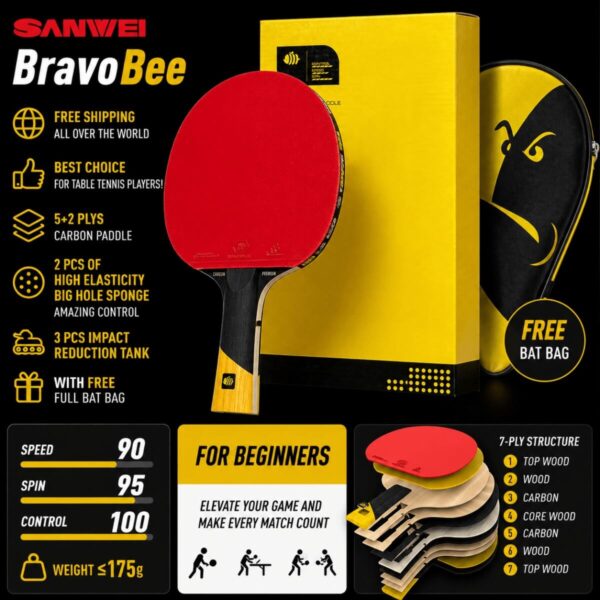
BravoBee Carbon Ping Pong Paddles
- Free Shipping All Over The World
- Best choice for table tennis players!
- 5+2 plys carbon paddle
- 2 pcs of high elasticity big hole sponge, amazing control
- 3 pcs Impact reduction tank
- with FREE full bat bag