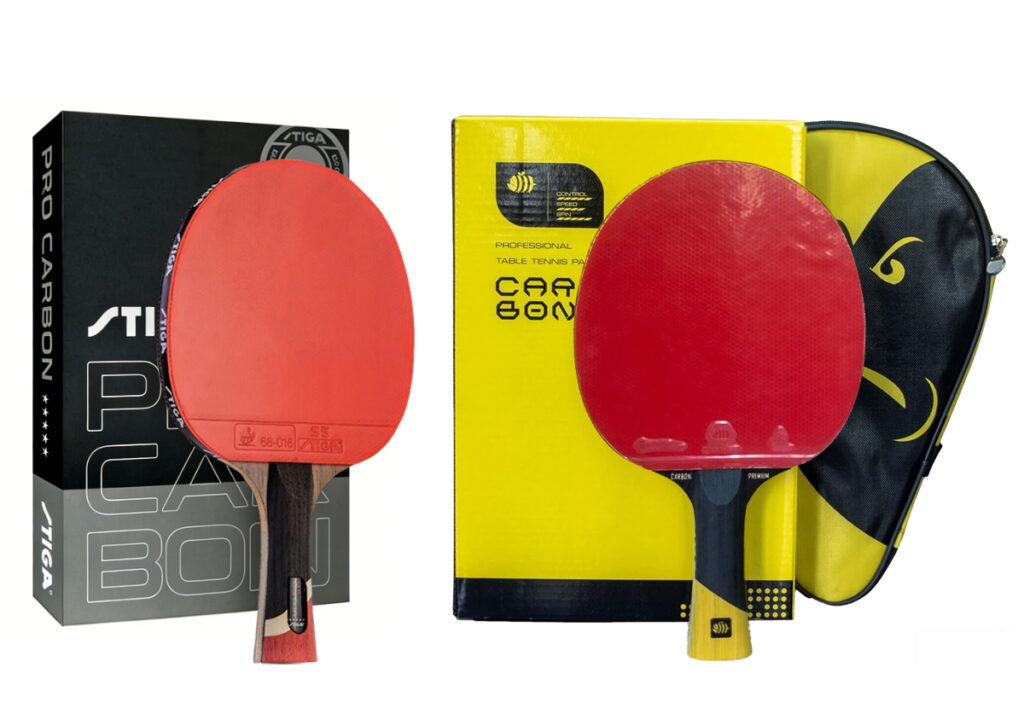

Work stress, endless notifications, the doom‑scroll spiral—sound familiar? My mind was constantly racing, and I felt trapped in a loop of anxiety. Then I discovered a simple, unexpected tool: a ping pong paddle. Now I play 15 minutes every day with my SANWEI BravoBee Carbon. What started as a fun break has become a non‑negotiable part of my daily ping pong habit. In this post, I’ll share how this mental wellness sport transformed my mood, reduced stress, and gave me a daily reset. We’ll explore ping pong mental health benefits, why stress relief table tennis works so well, and how the BravoBee’s design makes it a form of BravoBee therapy. Spoiler: you don’t need a therapist’s couch—sometimes you just need a paddle.
Why Ping Pong Is a Mental Health Superpower
When you’re stressed, your body is in fight‑or‑flight mode. Cortisol rises, muscles tense, and your mind races. Exercise helps, but not everyone wants to run or lift weights. Stress relief table tennis offers a gentler entry point. The quick lateral movements, the focus on a small ball, and the satisfying thwack of contact all work together to lower cortisol and release endorphins. After 15 minutes, my shoulders drop, my breathing deepens, and my brain finally quiets down.
Unlike passive activities (scrolling, watching TV), ping pong demands active engagement. You can’t ruminate about a work email when a ball is flying at you. That forced presence is a form of mindfulness. And because it’s fun, you’ll actually do it every day. That’s the foundation of a sustainable daily ping pong habit.
How the BravoBee Enhances the Therapeutic Effect
Not all paddles are equal when it comes to mental benefits. The BravoBee’s 100 control rating reduces the frustration of missing shots. When you’re learning or just playing for fun, nothing kills the mood faster than the ball flying off the table every swing. With the BravoBee, mishits still land. You stay in the rally, which keeps you in the flow state. That uninterrupted focus is where the mental magic happens.
The vibration reduction slots in the handle also play a role. They filter out harsh, jarring shocks while preserving the satisfying feedback of a clean hit. That means you feel the ball clearly without the sting. This comfortable feedback keeps you coming back day after day—an essential part of BravoBee therapy.
And let’s not forget the 95 spin rating. Being able to generate spin—even a little—gives you a sense of mastery. That small feeling of “I did that” is a powerful mood booster.
My Daily 15‑Minute Routine
Here’s what a typical session looks like for me. I set a timer for 15 minutes, grab my BravoBee and a bucket of balls, play alone (against a wall or a robot) or with my spouse. The structure is loose—sometimes I practice serves, sometimes I just rally. The key is consistency, not intensity.
- Minutes 0‑5: Easy forehand drives. Focus on smooth contact. Let the paddle’s control do the work.
- Minutes 5‑10: Backhand pushes and serves. Experiment with a little spin.
- Minutes 10‑15: Fun rally or footwork drill. Laugh if I miss.
That’s it. No pressure. No scorekeeping unless I want to. This simple daily ping pong habit has become my most reliable mental reset.
The Science of the Sweet Spot (and Your Brain)
Research shows that activities requiring hand‑eye coordination, quick decisions, and physical movement are especially good for ping pong mental health. Table tennis lights up multiple brain regions: the cerebellum for balance, the motor cortex for movement, and the prefrontal cortex for strategy. It’s like a full‑brain workout that also relaxes you.
When you use a paddle that gives clear feedback—like the BravoBee—you stay engaged. The brain gets a steady stream of satisfying sensations: the grip of the sponge, the click of a clean hit, the dip of a spinny serve. This sensory feedback loop is inherently calming. That’s why stress relief table tennis is more effective than mindlessly hitting a ball against a wall.
Over time, this daily practice rewires your stress response. You become less reactive because you’ve trained your brain to focus on one thing at a time. That’s a skill that carries over to work, relationships, and everything else.
Social Connection: The Underrated Ingredient
Playing alone is great, but playing with someone else amplifies the benefits. My spouse and I now have a standing “ping pong date” every evening. We talk between rallies. , laugh at our mistakes, high‑five good shots. That social connection is a powerful antidote to loneliness and anxiety. BravoBee therapy becomes couples therapy in the best way.
Even if you live alone, you can find a neighbor, a coworker, or join a local club. The shared experience of play releases oxytocin, the bonding hormone. It’s hard to stay stressed when you’re giggling over a missed smash.
And because the BravoBee is lightweight (≤175g) and durable, you can easily bring it to a friend’s house or keep it in your car for spontaneous games.
Why 15 Minutes Works Better Than an Hour
You might think longer is better. But for mental health, consistency beats duration. Fifteen minutes is short enough to fit into any schedule, even on busy days. There’s no mental barrier—“I don’t have time for an hour” is a common excuse. But 15 minutes? Anyone can do that. And once you start, you often play longer because it’s fun.
The key is to make it a daily ping pong habit. Same time, same place, same paddle. After a week, it becomes automatic. After a month, it becomes essential. My mood is noticeably worse on days I skip. That’s how I know it’s working.
Real Talk: It’s Not a Cure‑All, But It Helps
I’m not a doctor or therapist. Ping pong won’t fix clinical depression or severe anxiety on its own. But as a complementary tool, it’s powerful. It gives you a structured break, a physical outlet, and a sense of accomplishment. And it’s way cheaper than many other forms of therapy (though obviously not a replacement if you need professional help).
The BravoBee costs $29.90 with free shipping. That’s less than two therapy copays. And it lasts for years. For me, that’s a bargain for better mental wellness sport.
How to Start Your Own Daily Habit
Ready to try? Here’s a simple plan:
- Get a BravoBee Carbon. The control and feedback are essential for reducing frustration.
- Set up a small space. A garage, basement, or even a wall in your living room works.
- Commit to 15 minutes. Put it on your calendar. No phone, no distractions.
- Focus on fun, not performance. Don’t worry about getting better. Just play.
- Notice how you feel. After a week, you’ll start to crave the reset.
You don’t need to be good at ping pong. You just need to show up. The BravoBee’s 100 control will keep the ball on the table, and its 95 spin will give you small victories. That’s the foundation of ping pong mental health.
Your Turn: Play Your Way to a Better Mood
I never expected a ping pong paddle to change my daily outlook. But 15 minutes of stress relief table tennis has become my most reliable mental health tool. It’s active, engaging, and satisfying. The BravoBee’s thoughtful design—control, vibration slots, comfortable grip—makes the experience smooth and frustration‑free. This daily ping pong habit is now a cornerstone of my mental wellness sport routine. If you’re feeling overwhelmed, anxious, or just stuck in a rut, give it a try. Grab a BravoBee, clear some space, and play for 15 minutes. Your mood will thank you.
👉 Get your BravoBee here and start your own BravoBee therapy today. It’s cheaper than a therapist (but still see one if you need to!).
How does ping pong help your mental health? Share your experience in the comments—I’d love to hear your story!
Disclaimer: This article is for informational purposes only. If you’re struggling with serious mental health issues, please consult a qualified professional.
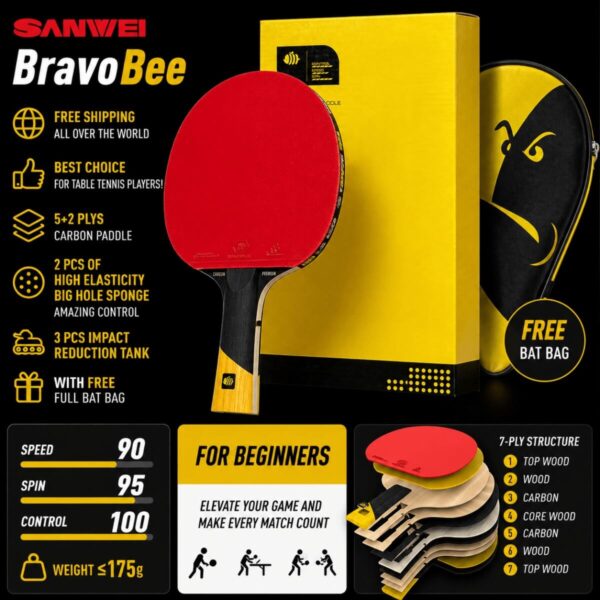
BravoBee Carbon Ping Pong Paddles
- Free Shipping All Over The World
- Best choice for table tennis players!
- 5+2 plys carbon paddle
- 2 pcs of high elasticity big hole sponge, amazing control
- 3 pcs Impact reduction tank
- with FREE full bat bag