
When you think of ping pong, you probably think of basement rec rooms, summer camps, or friendly office tournaments. But there’s a growing movement that sees this humble game as something much more powerful: therapy.
Around the world, people with Parkinson’s disease are picking up paddles and discovering something remarkable. The same game that’s been entertaining families for generations is now helping manage symptoms, improve quality of life, and bring hope to those living with this challenging condition.
And the science is finally catching up to what players have known for years. Let’s explore how ping pong is changing lives—and why the right paddle makes all the difference.
The Science: How Ping Pong Helps the Parkinson’s Brain
Parkinson’s disease is a progressive neurological disorder that affects dopamine-producing neurons in the brain. This leads to symptoms like tremor, rigidity, bradykinesia (slowness of movement), and postural instability [citation:5]. But here’s where ping pong enters the picture in a truly exciting way.
A 2020 study by Dr. Ken-ichi Inoue and colleagues at Fukuoka University in Japan followed 12 people with Parkinson’s (average age 73) who played ping pong once a week for six months. The results were striking: participants showed significant improvements in speech, handwriting, dressing, getting out of bed, and walking [citation:4][citation:8]. Neck muscle rigidity scores improved from “moderate” to “mild” on average. It took participants from more than two attempts to get out of bed at the start to just one attempt by the end [citation:8].
Dr. Shinsuke Fujioka, one of the study investigators, noted that “twisting axial muscles when hitting a ping pong ball may be the most efficacious for patients, especially for bradykinesia and balance problems” [citation:4].
A 2025 review published in Cureus confirmed these findings, concluding that table tennis improves motor performance, balance, coordination, and activities of daily living in people with Parkinson’s. The review also noted cognitive improvements, including enhanced attention, visuospatial processing, and executive function [citation:5].
The “Trifecta” of Benefits
Dr. Elana Clar, a neurologist at Hackensack University Medical Center and advisory board member of PingPongParkinson, explains why ping pong is uniquely beneficial: “While all forms of exercise are beneficial, the thing that makes ping-pong unique is that it incorporates a focus on balance, hand-eye coordination, and the rhythm or pace of reciprocal play. So it really hits the trifecta of physical, cognitive and social activities” [citation:1].
The sport demands fast-paced visual-motor responses, fine motor precision, and anticipatory control, stimulating both motor and cognitive networks that are compromised in Parkinson’s [citation:5].
How Ping Pong Improves Symptoms
Let’s break down exactly what happens when someone with Parkinson’s plays ping pong.
Motor Function and Balance
Ping pong requires constant lateral movement, quick starts and stops, and the twisting of axial muscles—all movements that target Parkinson’s symptoms directly. Dr. Fujioka notes that while patients often have difficulty moving front-to-back, they can move relatively easily in a lateral direction, making table tennis particularly suitable [citation:4].
A study by Olsson et al. (2020) found that table tennis training is safe and feasible for people with Parkinson’s and may improve balance control and self-reported physical activity levels [citation:1].
Cognitive Engagement
Your brain works overtime during a rally. You’re tracking the ball, calculating trajectory, planning your shot, and reacting in split seconds. This mental workout stimulates neuroplasticity—the brain’s ability to form new neural connections. Research shows that table tennis can be a powerful strategy to prevent cognitive decline and dementia in the elderly [citation:1].
Social Connection
Parkinson’s can be isolating. Symptoms like soft speech and reduced facial expression make social interaction harder. But ping pong creates a natural social environment. You’re playing with someone, not just near them. You’re smiling, maybe even laughing. Linda Egan, Parkinson’s disease program coordinator at Northwestern Medicine, puts it perfectly: “Many of us grew up playing Ping-Pong in our basements not even realizing we were exercising or improving brain function” [citation:2].
Real Stories, Real Hope
Sometimes the most powerful evidence comes not from studies, but from people whose lives have changed.
Nenad Bach: From Diagnosis to Global Movement
Croatian-American musician Nenad Bach was diagnosed with Parkinson’s in 2010 at age 56. His symptoms began affecting his ability to play guitar—a devastating prospect for a professional musician. Six years later, a friend invited him to play ping pong. He never imagined it would change everything.
“Without ping pong, I wouldn’t play the guitar anymore,” Nenad says. “It gave me the chance to write a song about Parkinson’s and about the sport that brought me back to music” [citation:6].
Inspired by his experience, Nenad helped found PingPongParkinson in 2017, a global non-profit that has since reached over 30 countries. His words capture the emotional impact: “We haven’t conquered Parkinson’s, but we conquered the fear of Parkinson’s” [citation:6].
The organization describes itself as “a family that you never had before your diagnosis. It’s a feeling of contentment, of acknowledgement” [citation:1].
Laini Weitz: Bringing “Parkie Pong” to Her Community
When 72-year-old Laini Weitz was diagnosed with Parkinson’s in early 2022, she was already an avid exerciser. But a knee injury sidelined her from pickleball, and she needed something else. She remembered playing ping pong in college and with her grandchildren, and started researching.
“The more I looked at it, the more I found all sorts of literature about how this is great for cognition and for spatial relationships, and for socialization and for strategy, and for movement and for gait. It just kept adding on and on. And it wasn’t just people talking, it was doctors who were saying this” [citation:10].
Laini brought the idea to her local senior center, launching a “Parkie Pong” program that now serves her community. Social worker Kristen Vavrek from UConn Health’s Parkinson’s Disease and Movement Disorders Center notes, “It’s a safe place to play, and to get some exercise and to socialize, and to know that you’re accepted. It’s a place where you can open up and maybe shed some of the anxiety or some of the depression” [citation:10].
Why the BravoBee Carbon Is an Excellent Choice
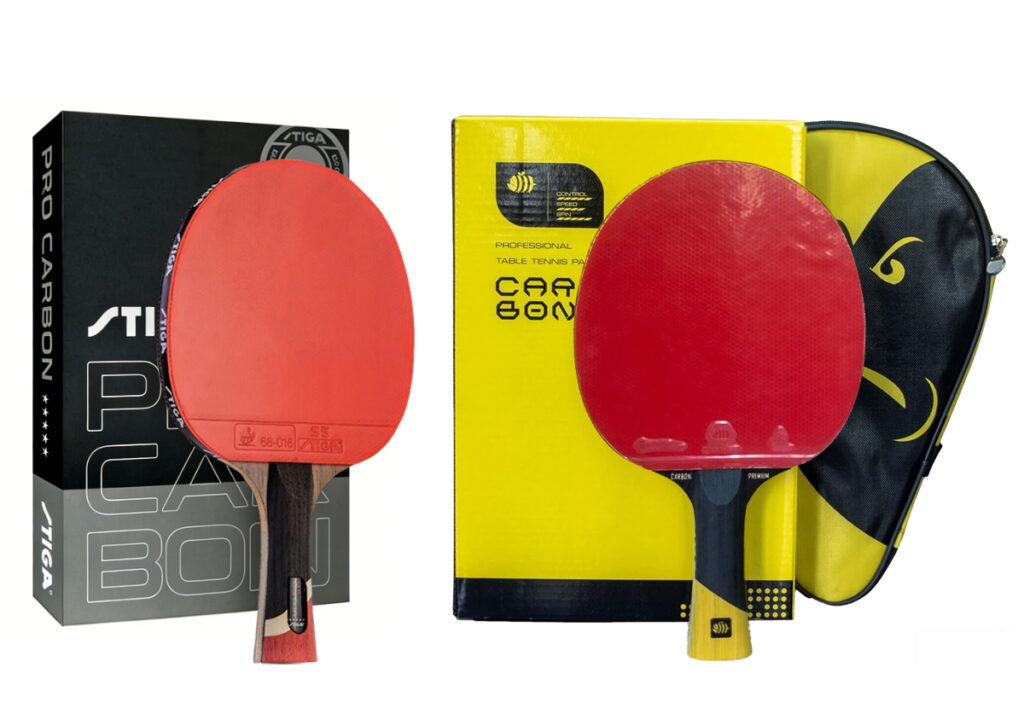
If you or a loved one is considering ping pong for Parkinson’s, equipment matters. The SANWEI BravoBee Carbon offers specific features that make it ideal for therapeutic play.
Lightweight Design Reduces Strain
At ≤175g, the BravoBee is noticeably lighter than many standard paddles. For someone with Parkinson’s, this means less arm fatigue and easier maneuverability. You can play longer sessions with less effort, which is crucial for building consistency.
Comfortable Grip for Better Control
The handle is designed for comfort, with strong natural adhesive ensuring a secure, long-lasting grip. When grip strength and dexterity are concerns, a paddle that feels good in the hand makes all the difference.
Vibration Reduction Protects Joints
The BravoBee features three impact reduction slots on each side of the handle. These slots dampen harsh vibrations while still providing clear feedback on where you hit the ball. For players who may have rigidity or tremor, this means more comfortable play and less stress on joints.
High Control Builds Confidence
With a control rating of 100, the BravoBee is exceptionally forgiving. The ball goes where you want it more consistently, which means longer rallies, more enjoyment, and greater motivation to keep playing. And consistency is key for therapeutic benefit.
Getting Started: What You Need to Know
If you’re considering ping pong for yourself or a loved one with Parkinson’s, here are some important tips:
Talk to Your Care Team First
Before starting any new activity, check with your GP, neurologist, or physiotherapist. They can help you decide if ping pong is right for your current symptoms and fitness level [citation:1].
Adaptations Are Available
Many Parkinson’s-friendly programs offer seated table tennis options. Players can remain in wheelchairs or sit in chairs while playing. Adaptations include no need to retrieve balls (volunteers help), assistance with movement, and modified rules for slower-paced games [citation:1].
Start Slow and Steady
Begin with short sessions and simple movements. Many programs include warm-ups and stretching to prevent injury. Remember, Parkinson’s symptoms can vary day to day—some days you’ll feel great, other days you may need breaks [citation:1].
Find a Community
Look for Parkinson’s-friendly programs at local community centers, clubs, or through organizations like PingPongParkinson Australia. Playing with others who understand your journey adds a powerful social dimension to the physical benefits [citation:1].
A Low-Impact, High-Reward Activity
Ping pong offers something rare: a therapeutic activity that doesn’t feel like therapy. It’s fun. It’s engaging. It brings smiles and laughter along with improved motor function and cognitive engagement.
As Mike DeBartolo, who helped launch Parkinson’s Players Ping Pong at Northwestern Medicine, puts it: “One of the few known things to slow the progression of Parkinson’s is exercise. Play takes it to another level. There is an isolating nature to Parkinson’s disease. Playing together gives us an opportunity to smile, laugh and let our hair down while staying active” [citation:2].
If you or someone you love is looking for a joyful way to support motor skills, improve quality of life, and connect with others who understand, ping pong might just be the answer.
👉 Explore the SANWEI BravoBee Carbon here—a paddle designed for comfort, control, and hours of therapeutic play.
Have you or a loved one experienced benefits from playing ping pong with Parkinson’s? Share your story in the comments—your experience could inspire someone else to pick up a paddle.
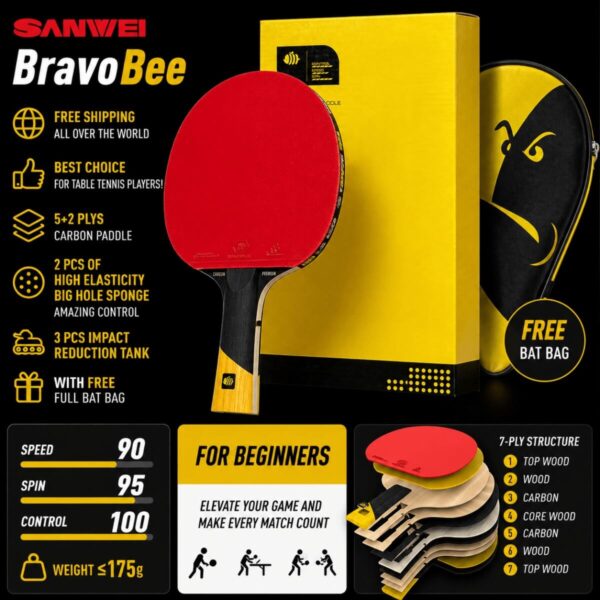
BravoBee Carbon Ping Pong Paddles
- Free Shipping All Over The World
- Best choice for table tennis players!
- 5+2 plys carbon paddle
- 2 pcs of high elasticity big hole sponge, amazing control
- 3 pcs Impact reduction tank
- with FREE full bat bag