If you’ve spent any time shopping for ping pong paddles, you’ve seen the numbers. 5-ply. 7-ply. 5+2. Carbon. Arylate. It can feel like reading a chemistry textbook. What does 5 layers of wood plus 2 layers of carbon actually mean for your game?
It’s not just marketing jargon. The construction of a paddle—the materials and how they’re layered—determines everything. Feel, power, control, sweet spot size. It’s the foundation that rubber and sponge are built on.
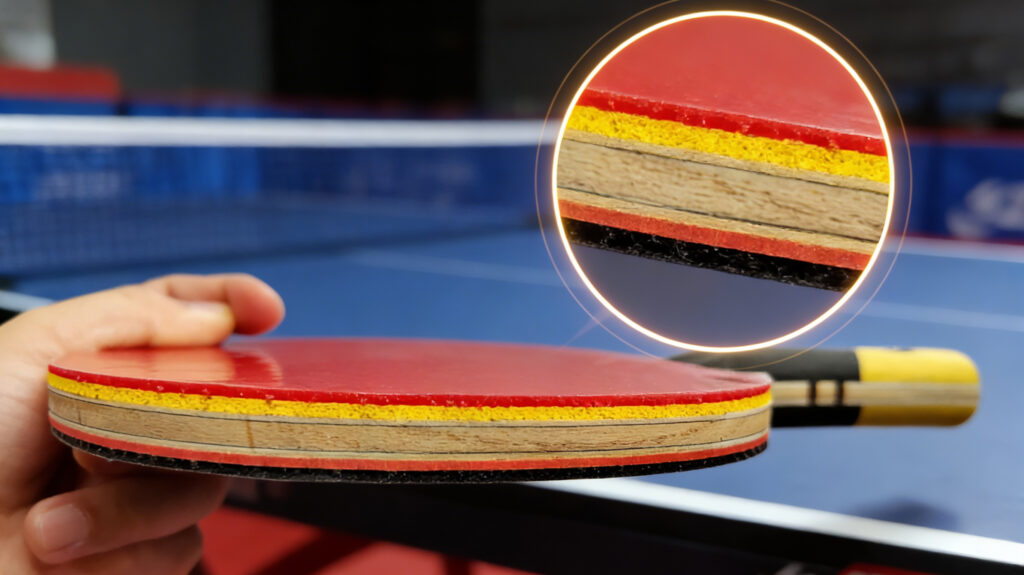
The SANWEI BravoBee Carbon uses a 5 wood + 2 carbon construction. That specific combination isn’t random. It’s a carefully engineered balance designed to give amateur players the best of both worlds: the feel of traditional wood and the stability of modern carbon. Let’s break down the science.
Wood Layers: The Foundation of Feel
The five wood layers in the BravoBee are the heart of its traditional character. Wood has been used in table tennis blades for over a century for good reason—it provides something that no other material quite replicates: feel.
Touch and Feedback
Wood is responsive. When the ball contacts a wood-based blade, the blade flexes slightly. That flex stores energy and releases it, giving you a sense of connection to the shot. You can feel the difference between a soft push and a hard loop. You can sense when you’ve hit the sweet spot versus the edge.
This feedback is essential for developing players. Without it, you’re swinging blind, guessing at what works. The wood layers give you the information you need to learn and adjust.
Natural Flex for Control
The five wood layers are arranged with alternating grain directions—a technique called plywood construction. This creates a blade that flexes in a predictable, controlled way. That flex adds dwell time: the ball stays on the paddle slightly longer, giving you more time to impart spin and direction.
For amateurs, this translates to forgiveness. You don’t need perfect timing. The blade works with you, not against you.
Carbon Layers: Stability and Power
Sandwiched between or beneath the wood layers are two layers of carbon fiber. This is where modern technology enters the picture.
Increased Stiffness
Carbon fiber is incredibly stiff for its weight. When you add carbon layers to a wood blade, you increase overall stiffness. A stiffer blade flexes less on impact, which means less energy is absorbed by the blade and more is transferred to the ball.
Result? More power with the same swing speed. Your drives have more zip. Your blocks are more stable.
Reduced Twisting on Off-Center Hits
This is a huge benefit for amateurs. When you hit the ball off-center with an all-wood blade, the blade can twist in your hand. That twist sends the ball in an unpredictable direction and creates an unpleasant vibration. Carbon layers resist that twisting. The blade stays stable, so the ball goes roughly where you aimed—even when your contact isn’t perfect.
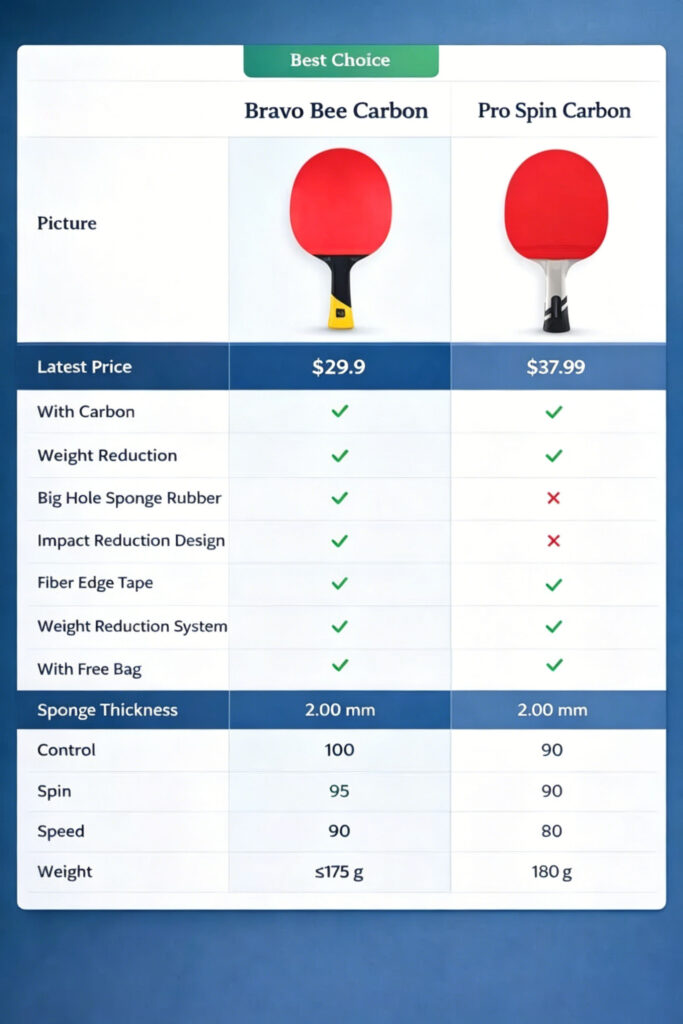
That’s the BravoBee’s 100 control rating in action. The carbon gives you a margin for error that all-wood blades can’t match.
The Combined Effect: A Large Sweet Spot
When you combine wood and carbon in this 5+2 configuration, something special happens: you get a larger effective sweet spot.
The sweet spot is the area on the blade where you get maximum power and control with minimal vibration. On an all-wood blade, the sweet spot is smaller. Hit outside it, and you feel it—the shot weakens, the ball drifts, the feedback stings.
The BravoBee’s carbon layers expand that sweet spot. The carbon adds stability across a wider area, meaning more of the blade surface delivers consistent performance. Off-center hits are still noticeable, but they’re not punishing. The ball still goes where you want. The feedback is still informative, not painful.
For amateurs, this is transformative. You can focus on your footwork and strategy instead of worrying about hitting the exact millimeter every time.
Compare to All-Wood: Less Vibration on Off-Center Hits
Let’s be clear: all-wood blades are wonderful. They offer unmatched feel and touch. Professional players often prefer them because they want that pure feedback. But for amateurs, all-wood blades have a downside: they transmit everything.
Hit off-center with an all-wood blade? You get the full shock. It’s not just uncomfortable—it can be discouraging. Beginners and intermediate players hit off-center often. That constant negative feedback can make the game feel harder than it is.
The BravoBee’s carbon layers dampen that harshness. You still feel where you hit, but the sting is gone. You can practice longer, play more confidently, and improve faster.
Compare to Thick Carbon: Not Too Stiff for Beginners
Some paddles go carbon-heavy: 7 layers of wood plus 3 or 4 carbon layers, or carbon throughout the entire blade. These “thick carbon” paddles are rockets. They’re incredibly stiff and fast.
For advanced players with perfect technique, that’s great. For the rest of us? It’s a problem. A blade that’s too stiff gives you no dwell time. The ball is on and off before you can control it. Shots become unpredictable, and your technique suffers because you’re compensating for the blade’s extreme nature.
The BravoBee’s 5+2 configuration is the sweet spot. Enough carbon for stability and power, enough wood for feel and control. It’s designed for players who want modern performance without sacrificing the traditional touch that makes table tennis so rewarding.
BravoBee’s Balance: Perfect for the Amateur Who Wants It All
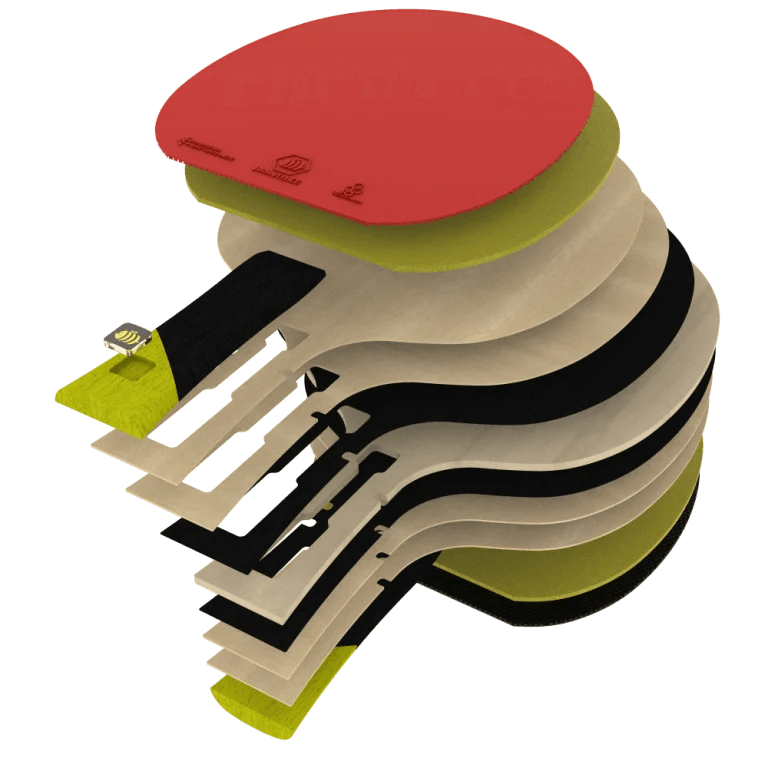
Let’s put it all together. The BravoBee’s 5 wood + 2 carbon construction delivers:
- Wood layers for feel: Traditional feedback helps you learn and adjust
- Natural flex for dwell time: More time to control the ball
- Carbon layers for stability: Reduced twisting on off-center hits
- Increased stiffness for power: More pop without extra effort
- Larger effective sweet spot: Forgiving across the blade face
- Reduced vibration: Comfortable for longer sessions
- Balanced performance: Not too slow, not too fast
This balance is exactly what amateur players need. You’re not a pro with perfect technique. You’re learning, experimenting, finding your style. You need a paddle that gives you room to grow—one that’s forgiving enough for your current level but capable enough for where you’re going.
The BravoBee delivers that. It’s a paddle you won’t outgrow quickly, but one that helps you improve while you use it.
Real-World Impact: What You’ll Feel at the Table
All this science translates directly to how the paddle plays. Here’s what you’ll notice:
More Consistent Shots
The expanded sweet spot and reduced twisting mean your shots will be more consistent, even when your technique isn’t perfect. You’ll hit more winners, make fewer unforced errors, and enjoy the game more.
Better Feedback, Less Pain
You’ll feel where you hit the ball—the carbon layers don’t eliminate feedback—but you won’t get the jarring shock that makes you want to stop playing. This means longer practice sessions and faster improvement.
Confidence on Aggressive Shots
Because the blade is stable, you can swing freely without worrying about the paddle twisting. That confidence translates to more aggressive, winning shots.
Touch When You Need It
The wood layers preserve the ability to play delicate shots. Pushes, drops, and flicks still feel controlled and precise. You don’t lose the soft game just because you have carbon in the blade.
Tech You Can Feel
The BravoBee’s 5+2 construction isn’t just a spec sheet entry. It’s a deliberate design choice that solves real problems for amateur players. You get the power and stability of carbon with the feel and control of wood. You get a larger sweet spot, reduced vibration, and a blade that grows with you.
👉 Get your BravoBee Carbon here and feel the science for yourself. Your game will thank you.
Have you noticed how paddle construction affects your play? Share your experience in the comments—I’d love to hear what works for you!
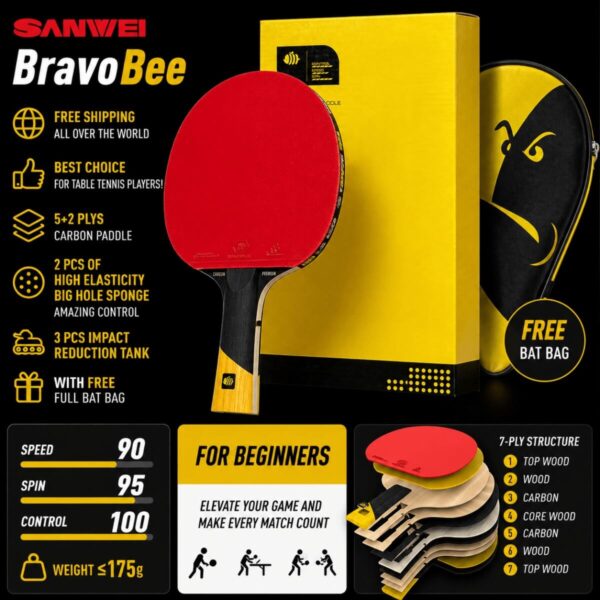
BravoBee Carbon Ping Pong Paddles
- Free Shipping All Over The World
- Best choice for table tennis players!
- 5+2 plys carbon paddle
- 2 pcs of high elasticity big hole sponge, amazing control
- 3 pcs Impact reduction tank
- with FREE full bat bag